
Kevin Weaver, was born in Scotland but moved to England aged ten. On completing a BA Hons degree in the arts, he worked as a photojournalist covering conflicts across the world in the 1990s, including the Romanian revolution, the Bosnian war, the Rwandan genocide and the Kosovo conflict, for The Independent and several other newspapers and magazines. The British photojournalist whose camera and whose own blood both ended up on the record of besieged Sarajevo. He by his own telling grew up fast: his mother died of cancer when he was seventeen, an event he later described as the hinge on which his entire life turned.
“After her death I change and become much darker as a person,” he wrote. “I strike out at the doctors who failed my mother and those closest, blaming my distant father and cutting off my brother, family becomes a dirty word. I attempt suicide then rebuild myself going to Brighton Poly to study art & media, which leads me on an inexorable path towards journalism and war.”
That path took him first through London’s own hidden wars, drug abuse, prostitution, homelessness, gang violence, IRA bombings, mass demonstrations before, as he put it, “the natural progression is to cover revolution and war abroad.” He had, he admitted candidly, “a similar cavalier disturbing attitude to relationships with women” and “seem to have a death wish and care little for my own safety.” In June 1992, aged twenty-eight, he arrived alone in a city under siege.
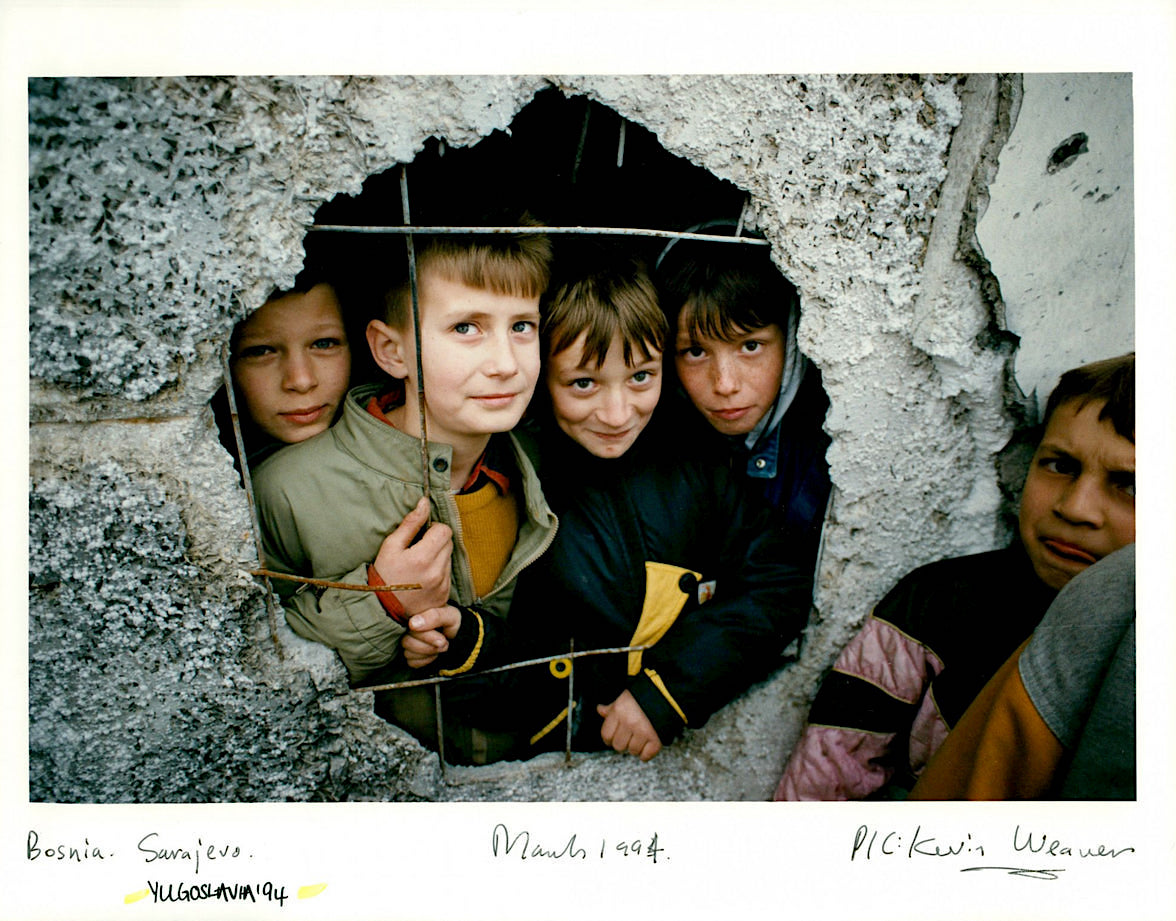 Children during the Siege of Sarajevo, photo by Kevin Weaver
“I am a young 28 year-old freelance photojournalist trying to make it,” he wrote, “and have no flak jacket, no car, no expense account, no fixer, translator or team behind me. No one to phone if it all goes wrong. I am alone.”
One of Weaver’s earliest Sarajevo images, taken in late June 1992, of pedestrians sprinting across an exposed intersection on Maršala Tita street has become one of his defining frames of the siege’s opening months. Looking back on it decades later, he recalled the scene with a photographer’s clinical precision laid over something closer to dread:
“The snipers in that area were very active that day due to it being a very busy area near the main food market and the main artery into town. I felt slightly uneasy standing waiting for someone to risk the roulette of running across this street where 3 or 4 bullets were fired at pedestrians every 2 or 3 minutes. This was known as ambulance chasing to journalists, as you were waiting for people to die basically… Many people didn’t run at all.”
Kevin Weaver
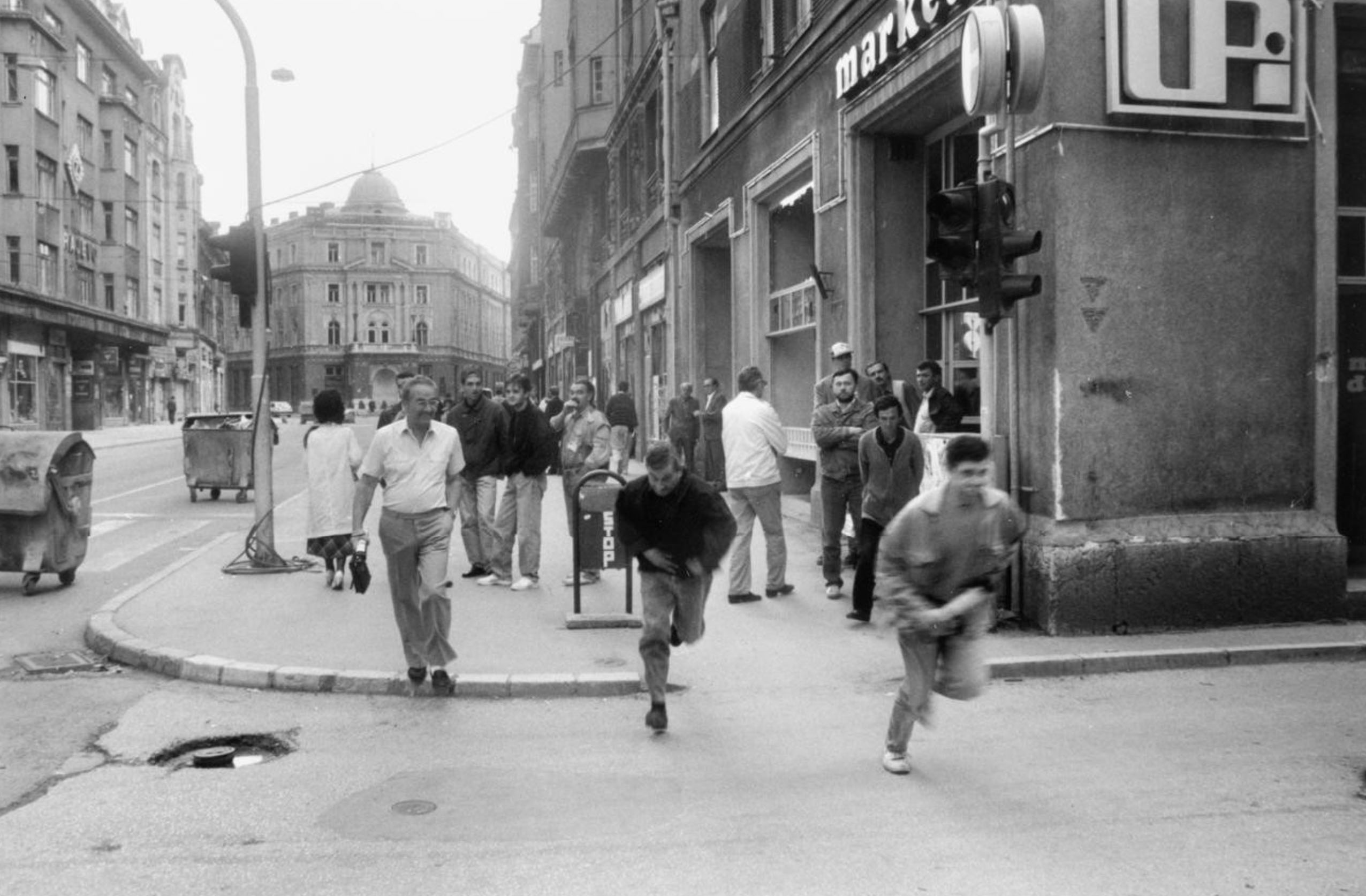 Siege of Sarajevo, photo by Kevin Weaver
He shot the frame on 35mm black-and-white film at a shutter speed deliberately chosen to freeze the runners while still holding a trace of motion blur “to have some movement blur,” as he described it, a small technical choice that gave the image its particular, unbearable tension between stillness and flight.
A week after making that photograph, on 29 June 1992, Weaver and French journalist Jean Hatzfeld of Libération were driving down the exposed airport road toward Sarajevo’s airport, covering the UN’s attempt to open the city to the first humanitarian aid flights since the siege began, when their white Peugeot came under sustained sniper fire. In his unpublished memoir For the Love of Sarajevo, Weaver recounted the ambush in brutal, close detail:
“The bullets crack and whizz about my head like maddened bees round a hive as I flatten myself against the front seat… Another couple of ceerrracccks! ring out and I feel the impact of a bullet in my left thigh, as if I have been punched very hard. Surprise! I am part of this. God! I’ve really been shot!”
Kevin Weaver, “For the Love of Sarajevo”
Hatzfeld, in the driver’s seat, took two bullets that severed his left leg below the knee. Weaver dragged him from the wreck of the car into a roadside ditch, tied his own bandana around Hatzfeld’s leg as a tourniquet, and talked to him to keep him conscious as they waited, certain the gunmen might finish the job. “I want to play football again,” Hatzfeld whimpered. “Don’t worry, I’ve seen worse!” Weaver lied back, trying to hold them both together.
Weaver had been told by a nurse that the bullet had passed cleanly through his thigh. It hadn’t: it had travelled upward and lodged two inches from his spine, quietly poisoning his bloodstream with lead while he waited, undiagnosed, for surgery the following day. He became the first journalist medically evacuated from Sarajevo by UNPROFOR, the UN force sent to the city to protect humanitarian aid. In his own words, on his personal website, the shooting marked “the beginning of a love-hate relationship with the Balkans that was to consume me for the next ten years.”
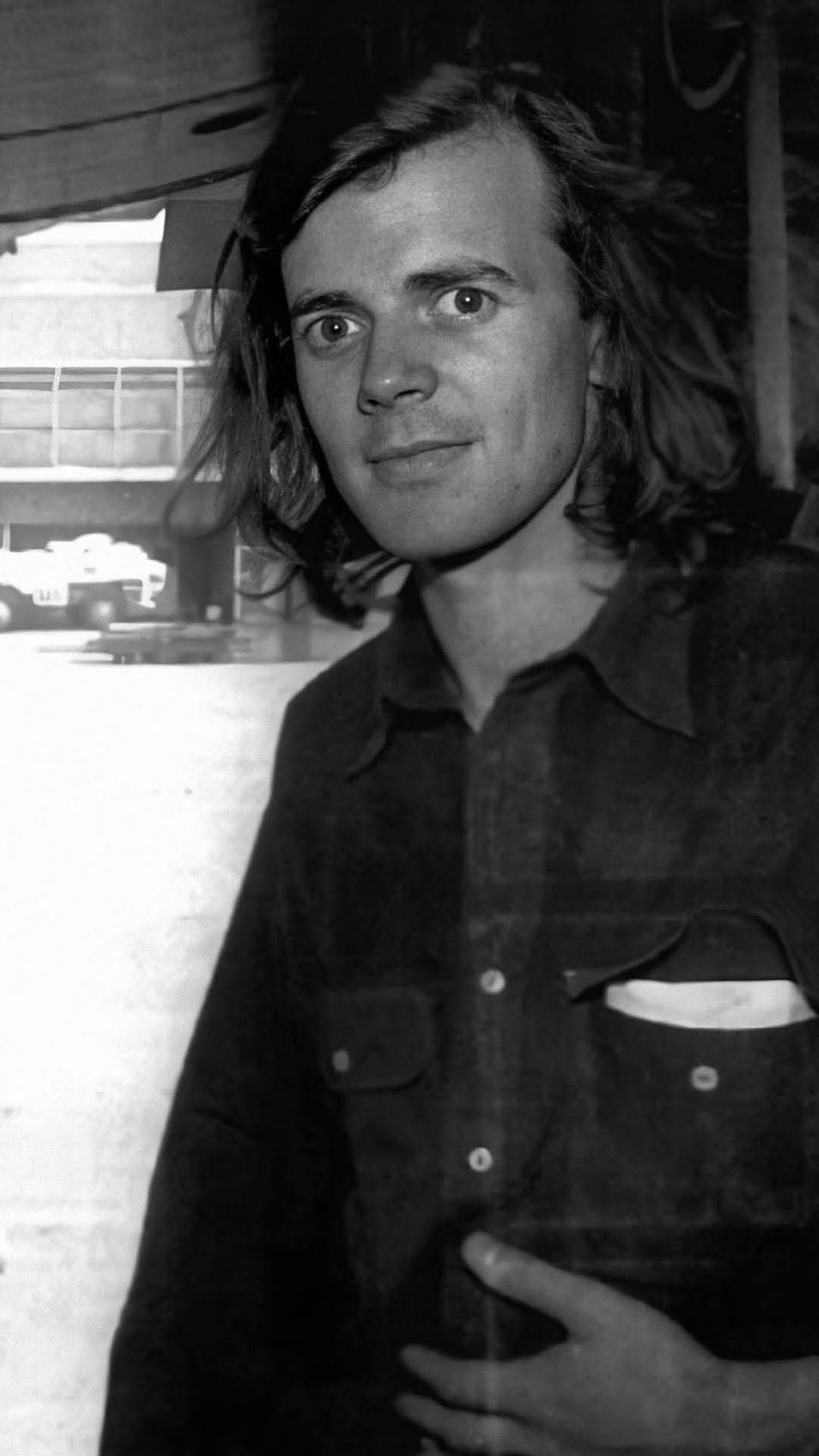 Kevin Weaver on the RAF Hercules evacuation flight from Sarajevo to Zagreb, photo by Barry Batchelor
“A photograph I’ve just been sent which was taken after I was shot in Sarajevo in June 1992. I was at Sarajevo airport being medically evaced after being operated on in Koševo Hospital in Sarajevo. I take this opportunity to thank them for their care under very difficult circumstances and the British female medical officer who organised my evacuation and subsequently tragically lost her life.”
— Kevin Weaver, Facebook, 26 April 2022
Like many of the journalists wounded in Sarajevo, Weaver went back. He returned repeatedly through the remainder of the war and its long aftermath, covering the UN’s International Criminal Tribunal for the former Yugoslavia and the grim, meticulous work of exhuming mass graves and identifying the dead through DNA testing. A year after he was shot, he deliberately sought out and photographed the exact spot on the airport road where the ambush had happened, by then a burned-out, bullet-pocked house on which someone had scrawled, in black capitals: “WELCOME TO SARAJEVO.” He called it, in his own dark humour, “Bosnia’s black beautiful humour. An epitaph to mine and Jean’s folly, and that of many more.”
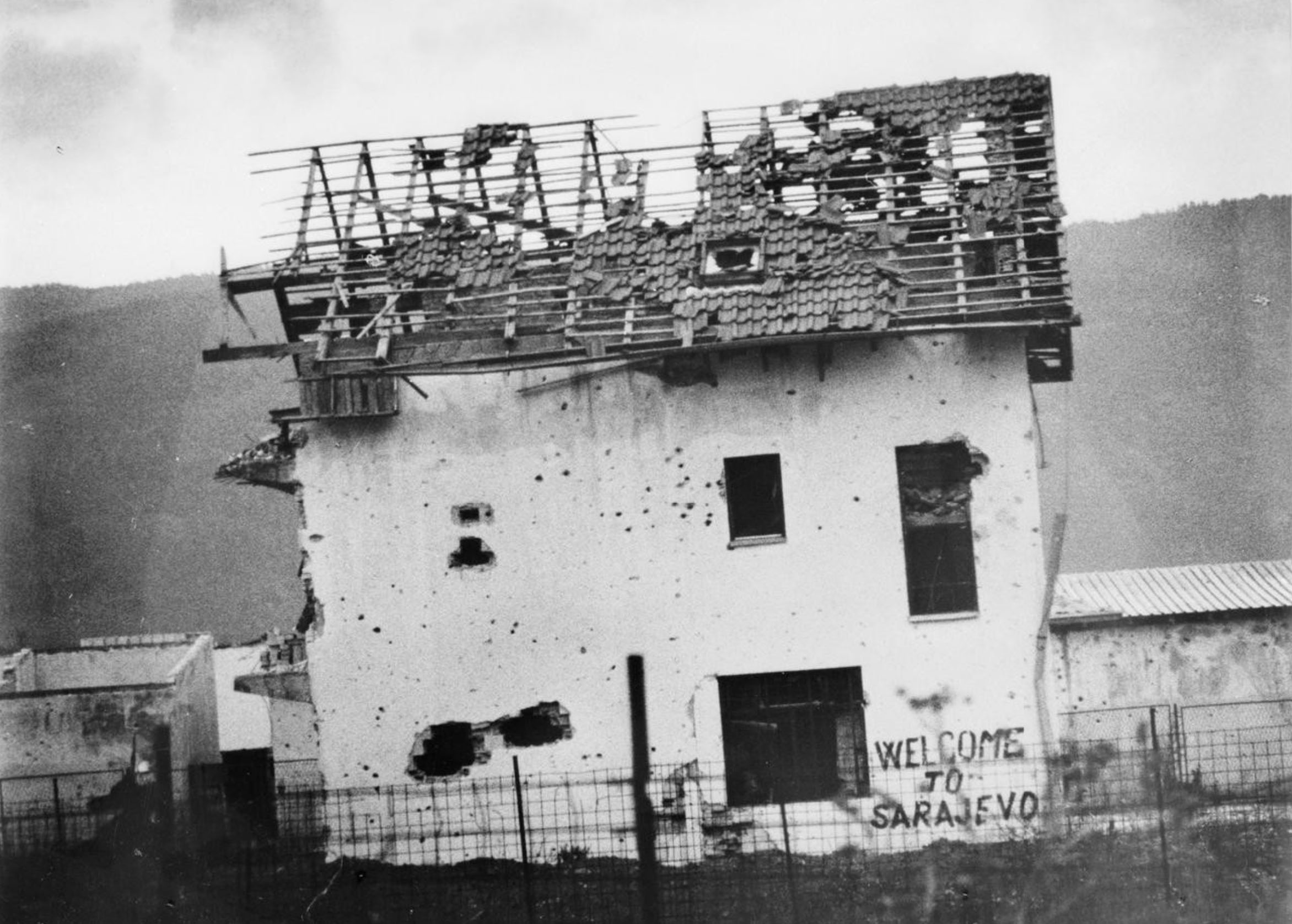 Welcome to Sarajevo, photo by Kevin Weaver
Nineteen journalists were killed covering the siege before the Dayton Peace Accords were signed in December 1995. Weaver was not among them, but he carried the siege with him for the rest of his life in ways both visible and private, in his photographs, in the bullet fragment he lived with, and, friends say, in a restlessness that never fully settled.
In the years that followed, Weaver rebuilt a life in London, teaching and living for many years on the Tulse Hill Estate in Brixton, a flat that one old friend remembered as “a homage to his work as a war correspondent in Bosnia and Rwanda,” its unedited photographs, she said, “beautiful as much as they were shocking and disturbing.” In 2005–06, Weaver was diagnosed with PTSD arising from his war experiences, and began making paintings and sculptures based on his feelings and the nightmares born of his traumatic experiences During this time he began making art and sculpture. He moved to Frizington, in Ennerdale, west Cumbria, in 2010, left teaching in 2013, and began working as a full-time artist where he found a second creative life as a painter, singer-songwriter and acoustic musician, exhibiting his artwork at the Lowes Court Gallery in Egremont and playing open-mic nights at the Florence Mine.
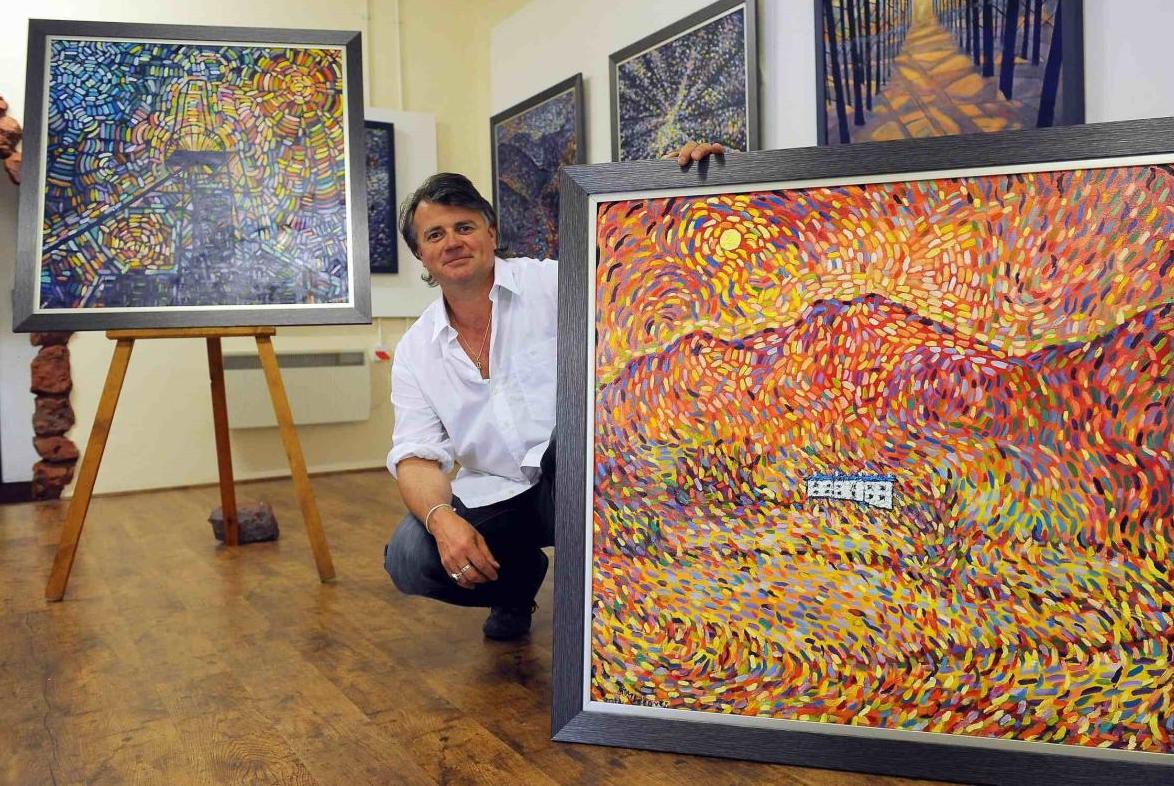
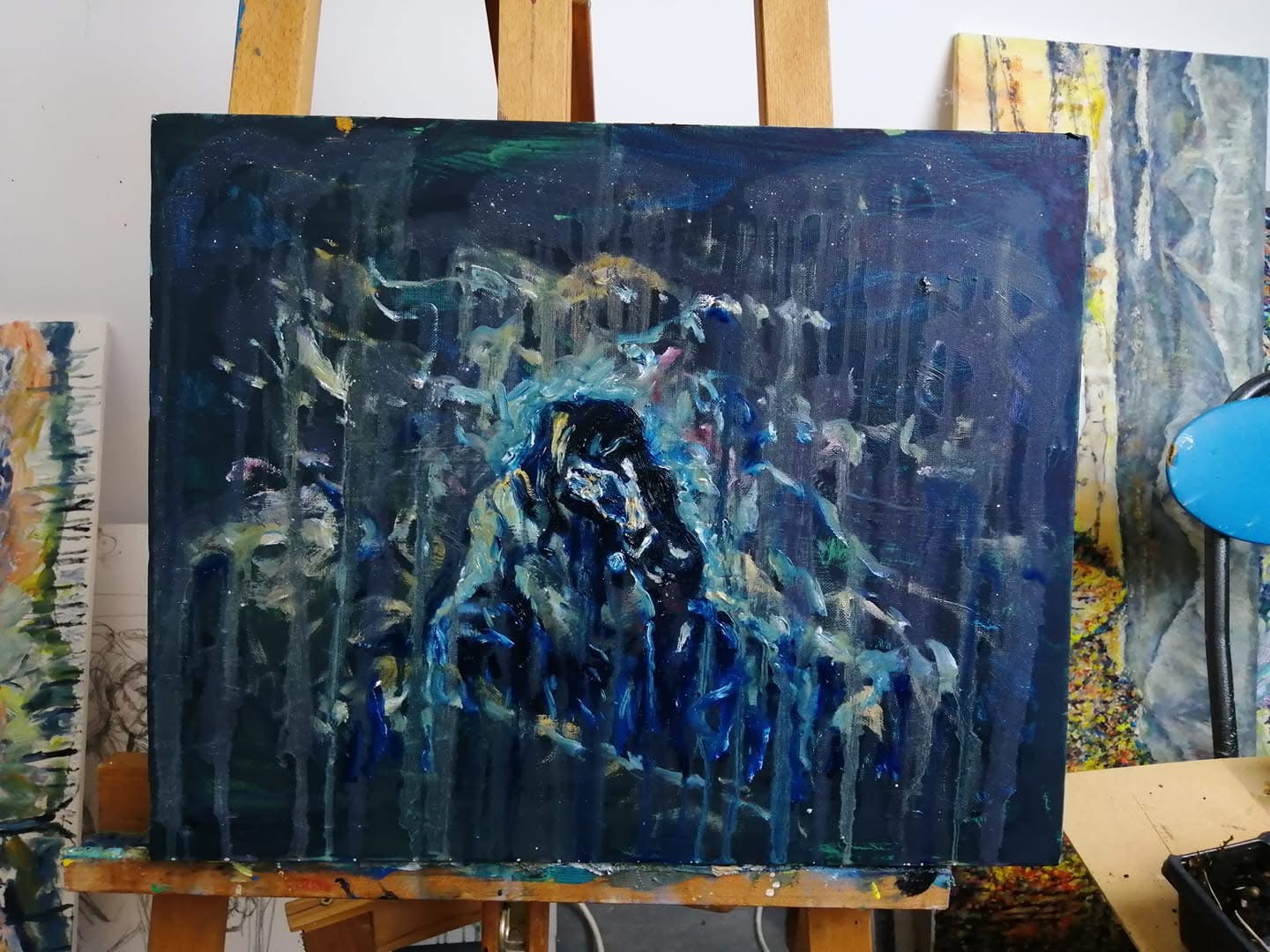
But the war never left his work. Long after he put down his camera, Weaver kept returning to the images seared into him from Bosnia and, later, Rwanda, this time rendering them in oil paint rather than silver halide. Between 2020 and 2022 he posted a series of new paintings on Facebook, each built from a photograph he had taken decades earlier, with captions that read like a second, quieter testimony to what he had witnessed:
“‘Loss’ newly finished painting from a photograph I took in Bosnia in 1993. Seems somehow appropriate for so much of what the world is going through right now. Maybe this will make some appreciate what we had. When I returned from a month in a warzone I was always struck by how much of humanity took for granted our peaceful prosperity and cared little for what others in less well off countries, many of whom were at war, were going through.”
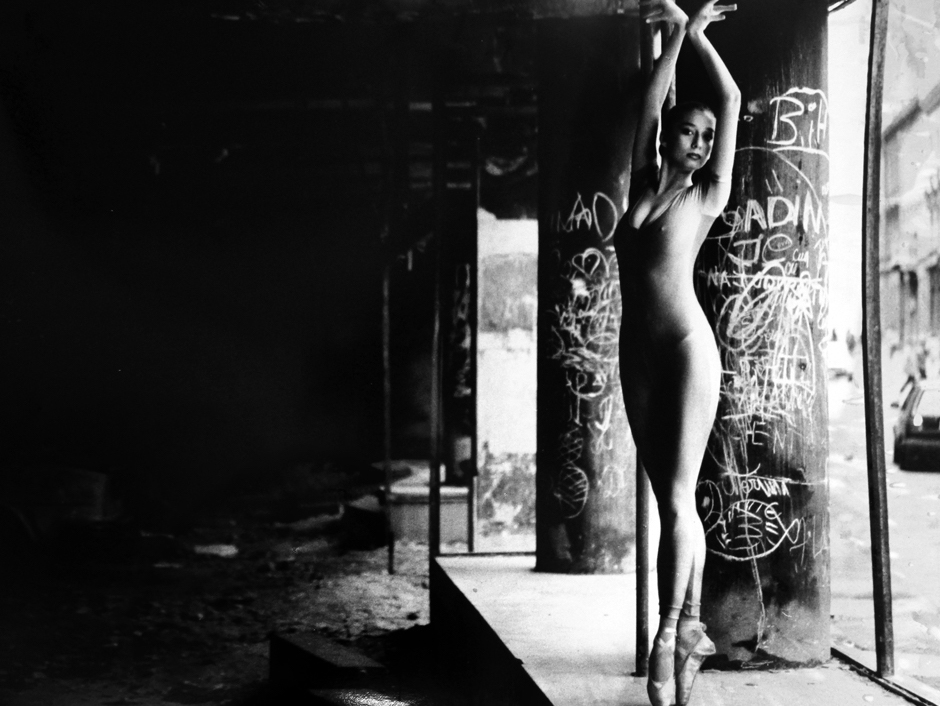
“Beginning of new painting of a Bosnian ballet dancer, Nina Brulic, from a photograph I took during the war in Bosnia in Sarajevo 1993.”
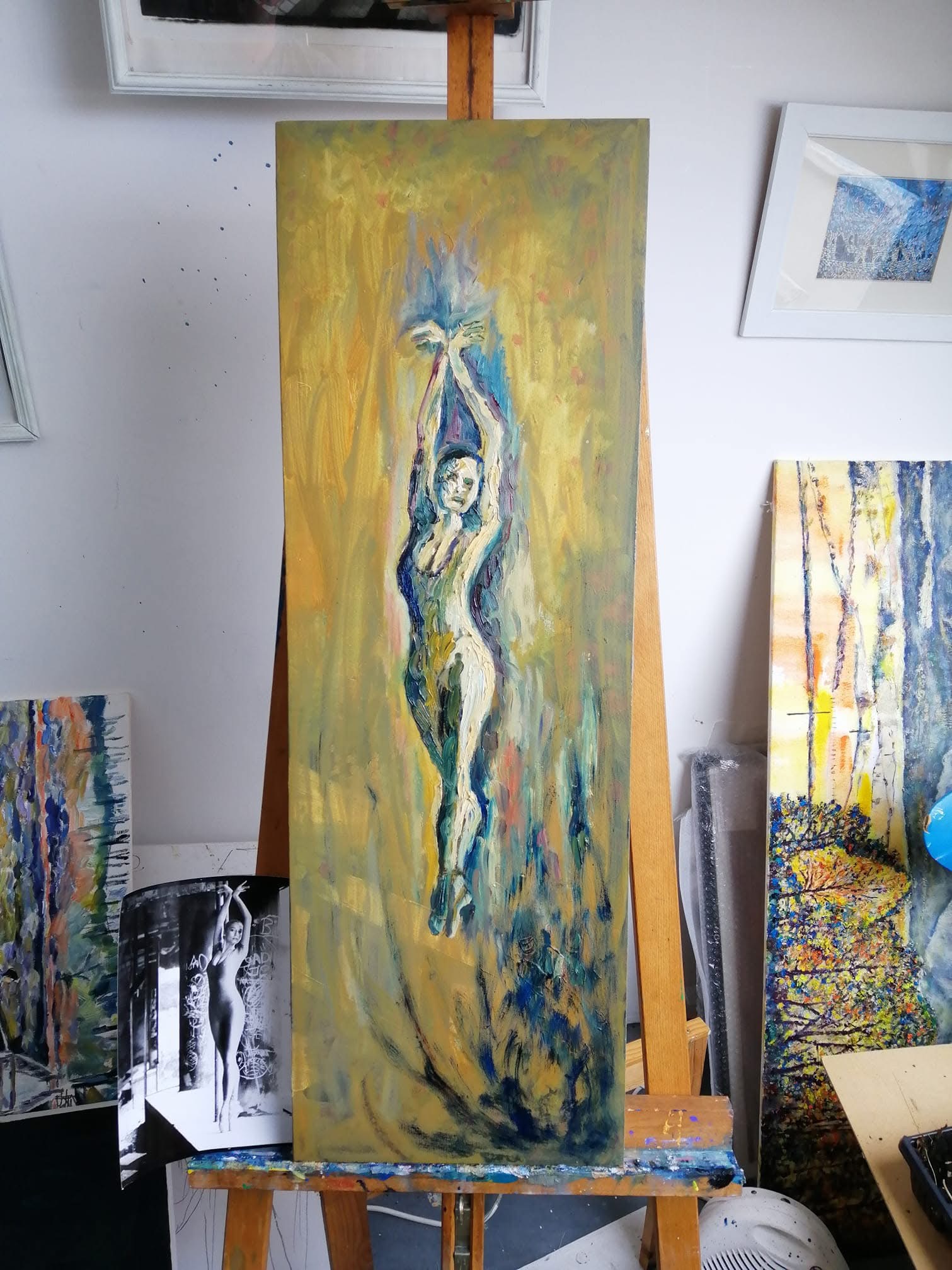
Nina Brulic is a ballet dancer photographed at age of 18 dancing inside a war-damaged building in Sarajevo in 1993 during the war. At the time Kevin's photograph was titled "Dancing In Ruins".
His war paintings returned him, canvas by canvas, to the three conflicts that had defined his years as a photojournalist. From Bosnia came some of his most direct work: “a heartfelt tribute to the courage of the people in the painting”. From Rwanda came Mother Earth, an oil on canvas made from his coverage of the 1994 genocide, and Through the Eyes of a Child, Mugunga Rwandan Refugee Camp, Zaire, August 1994, drawn from the refugee camps he photographed in the genocide’s aftermath. His time covering the Kosovo conflict of 1999 likewise fed directly into his art, including a painting on the exodus of Kosovar refugees that was later the subject of a feature in Kosovo’s Koha Ditore newspaper. He exhibited this body of work together — “war paintings based on the artist’s reporting days in Bosnia, Rwanda and Kosovo,” as one gallery described it, in shows including War and Peace at Castle Douglas Library Art Gallery (2016), the Python Gallery in Middlesbrough (2016), Florence Mine, Egremont (2018).
Landscape and nature painting became the other and ultimately larger, half of Weaver’s art, he described himself on his own website simply as “War Artist. Landscape Painter.” Settled among the fells of west Cumbria, he painted the country around his home obsessively and in every season. He ranged further afield too, painting the coasts and harbours of his native Scotland and of Cornwall, Port Patrick Harbour Fishing Boats, Fog Rolls into Porthleven Harbour, Cornwall, Boat in a Storm off St Ives Harbour and Dumfries and Galloway.
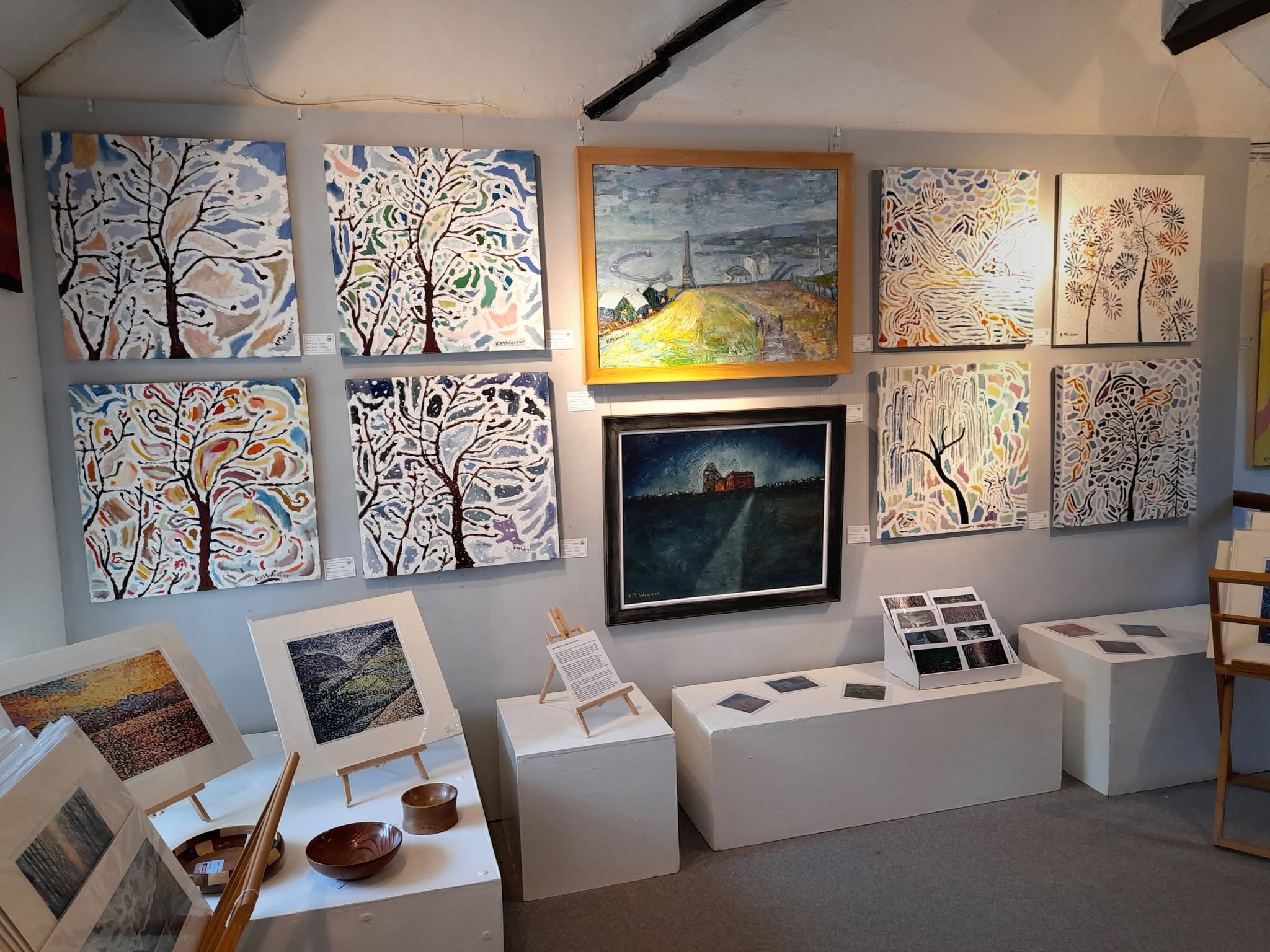
This landscape and nature work was shown steadily across Cumbria and the Scottish borders over the following decade: at Viridian Gallery and Gallery Artemis, both in his adopted town of Cockermouth, including the show The Light at the End…, studies of “light through trees and across the landscapes of West Cumbria” (2015); at Lowes Court Gallery, Egremont, in the exhibition Light (December 2016), featuring West Cumbrian, Cornish and Scottish scenes; at Natterjacks in Ulverston, in a show titled Lakeland Landscapes (2019); and at Percy House Gallery in Cockermouth, which represented his work and hosted his exhibition Big Lakeland Skies (May 2021). He was a guest artist with Cherrydidi in Keswick and Ambleside through 2020, was a finalist for the Castlegate Prize that same year, and regularly sold paintings through Tarantella restaurant in Cockermouth and in group shows such as Random Acts of Art at Gallery Artemis (2017) and the long-running Allonby Village Hall art exhibition.
In his final years, Weaver found a settled happiness with his partner, Linda “his soulmate,” as friends consistently describe her, a relationship those closest to the couple say transformed him.
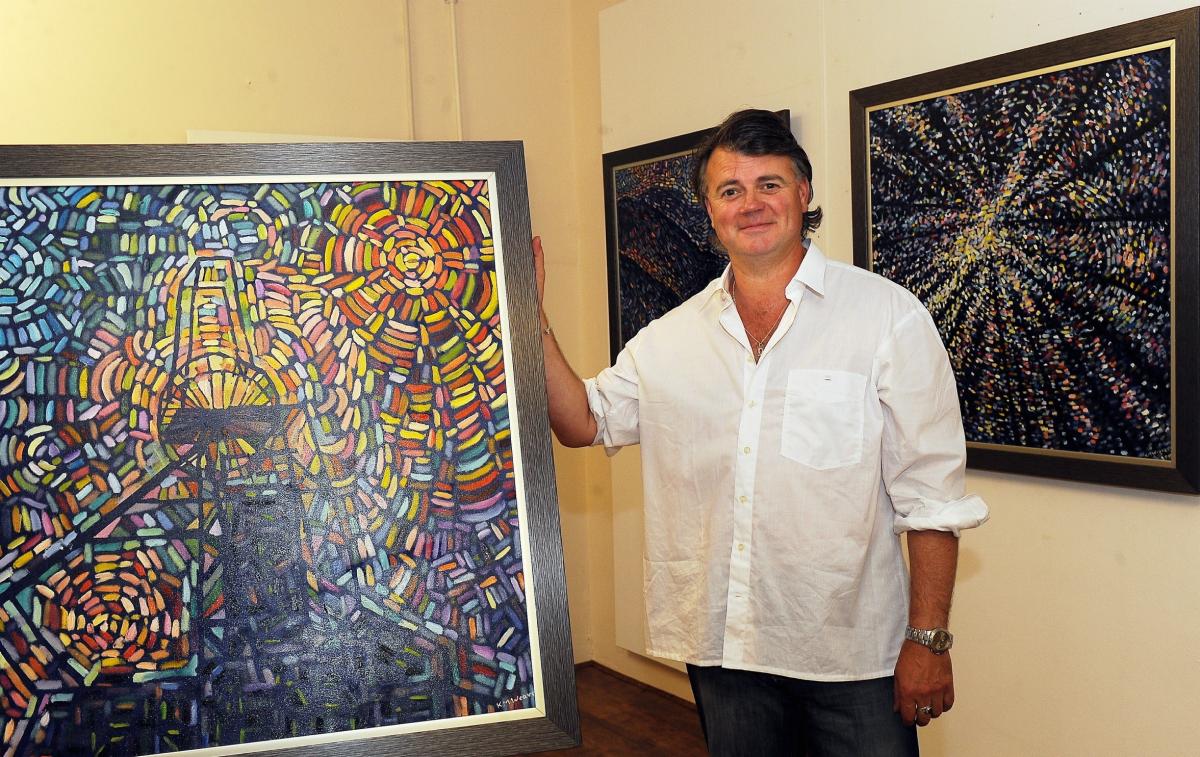
KEVIN WEAVER was born on 7 December 1963 in Scotland.
He died on 16 September 2024, survived by his partner Linda and his brother Gary.
__