
On the afternoon of 23 July 1992, CNN camerawoman Margaret Moth was riding in a vehicle with colleagues along the stretch of Sarajevo already known to every journalist in the city as Sniper's Alley, heading for the besieged airport to interview pilots flying in relief supplies. A bullet, fired by a Bosnian Serb sniper from hundreds of yards away, tore through the car and struck her in the face, shattering her jaw, destroying nearly all of her teeth and part of her tongue, and leaving shrapnel lodged in her palate and lungs. "My face, it felt like my face was falling off," she said later. "I remember I was trying to hold my face back on. I knew I had to keep calm and I knew I had to stay conscious: if I go unconscious, I will stop breathing." She was rushed into emergency surgery locally before being medevaced to the Mayo Clinic in Rochester, Minnesota. Doctors were not certain, at first, that she would survive.
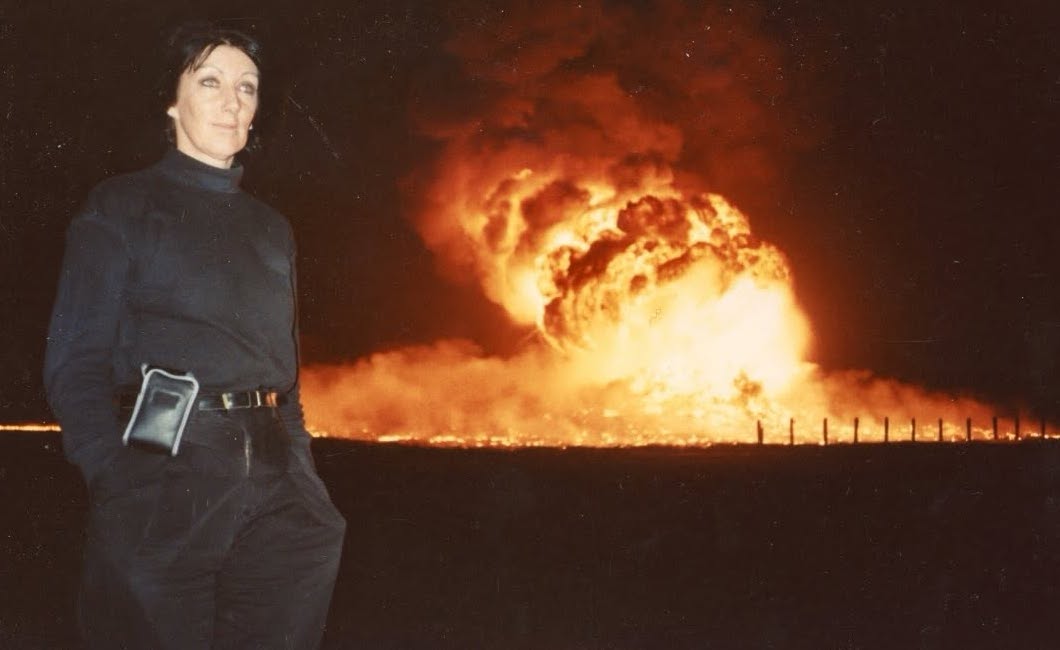
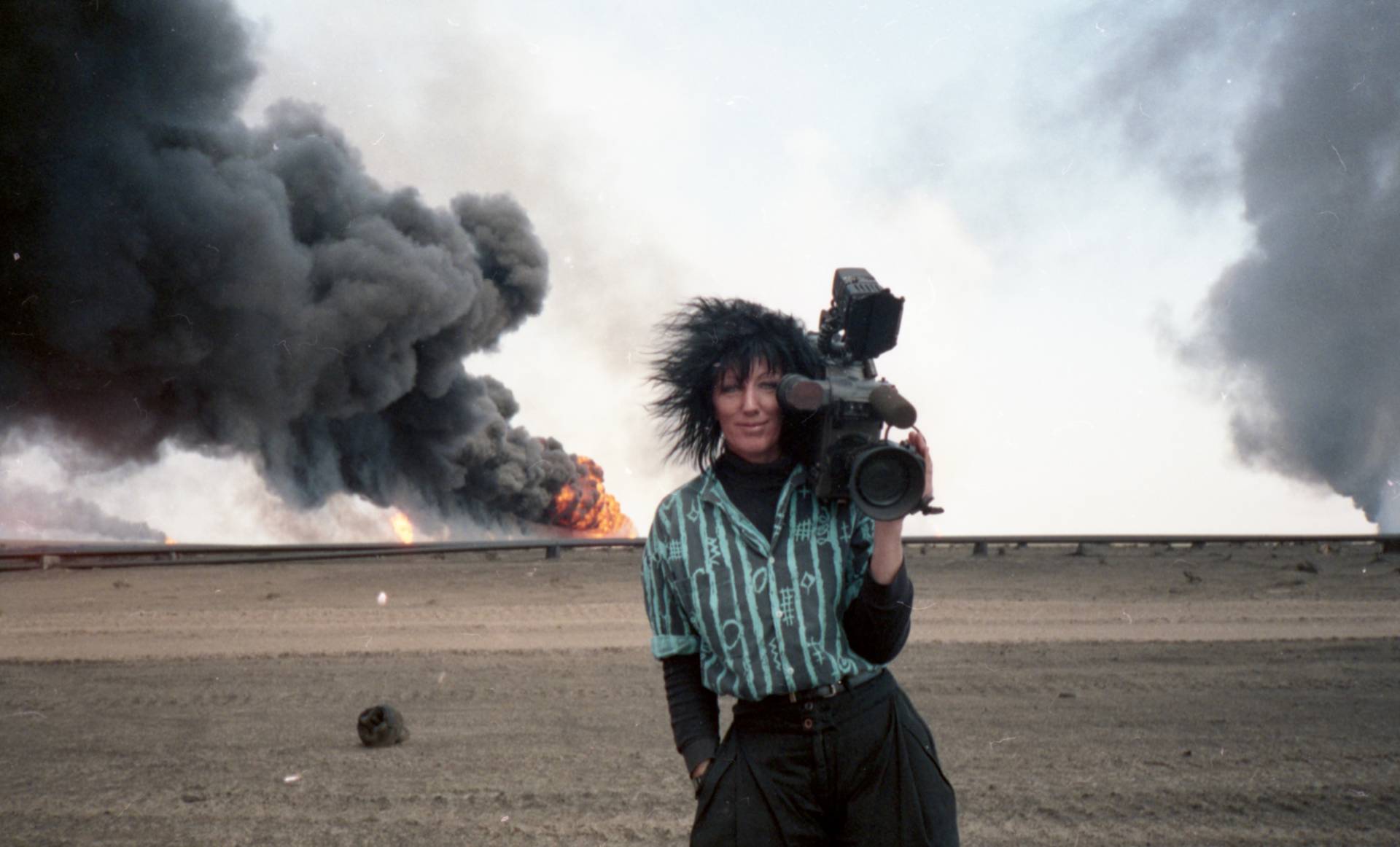 Margaret Moth filming burning Kuwaiti oil wells during the 1991 Gulf War, one of her first major assignments for CNN. Photo: Courtesy of the Sundance Institute / "Never Look Away."
Born Margaret Wilson in Gisborne, New Zealand, on 21 August 1951, to a homemaker mother and a father who built swimming pools, she had originally wanted to be a motor mechanic "but found that no one would give a girl an apprenticeship. It was the first time I realised that being female is a handicap," she recalled. She studied film and photography at the University of Canterbury in Christchurch before moving to Dunedin, where in the 1970s she became New Zealand's first television news camerawoman, working for the local station DNTV2 and later the national broadcaster TVNZ, racing videotapes to the airport by car so they would reach the evening news in Auckland and Wellington. It was around this time, after one too many Margarets and Wilsons in her newsroom, that she legally changed her name. She wanted to be "Margaret Tiger Moth," a nod to the biplane from which she had made her first skydive, but New Zealand officials would not allow it, so she became, simply, Margaret Gipsy Moth.
"It was the first time I realised that being female is a handicap." Margaret Moth, recalling being refused a mechanic's apprenticeship as a young woman.
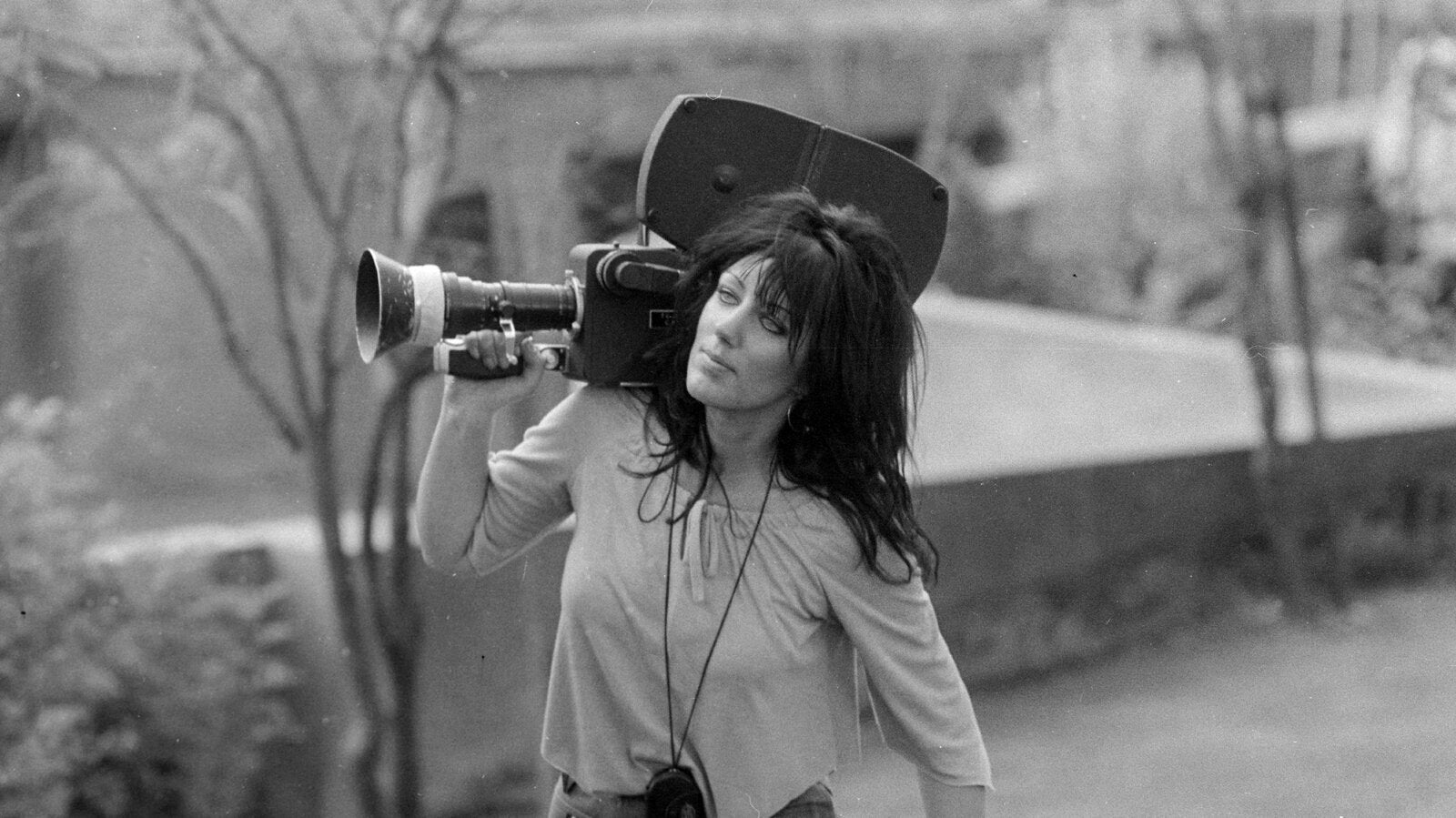
She moved to the United States in 1980, working for KHOU in Houston, Texas, for roughly seven years, before CNN hired her in 1990. Within two years, she had already covered the Persian Gulf War, the Tbilisi civil war in Georgia, and the rioting that followed the assassination of Indian prime minister Indira Gandhi. Jet-black hair, heavy black eyeliner, black clothes, black combat boots she sometimes slept in on assignment — colleagues nicknamed her "the Lady in Black," and she became known, above all, for an almost complete absence of fear. In Tbilisi, when militiamen opened fire on a crowd and other camera operators dived behind cars, Moth stood her ground and kept filming. She once held her camera steady while an Israeli soldier swung his rifle toward her lens and fired a round.
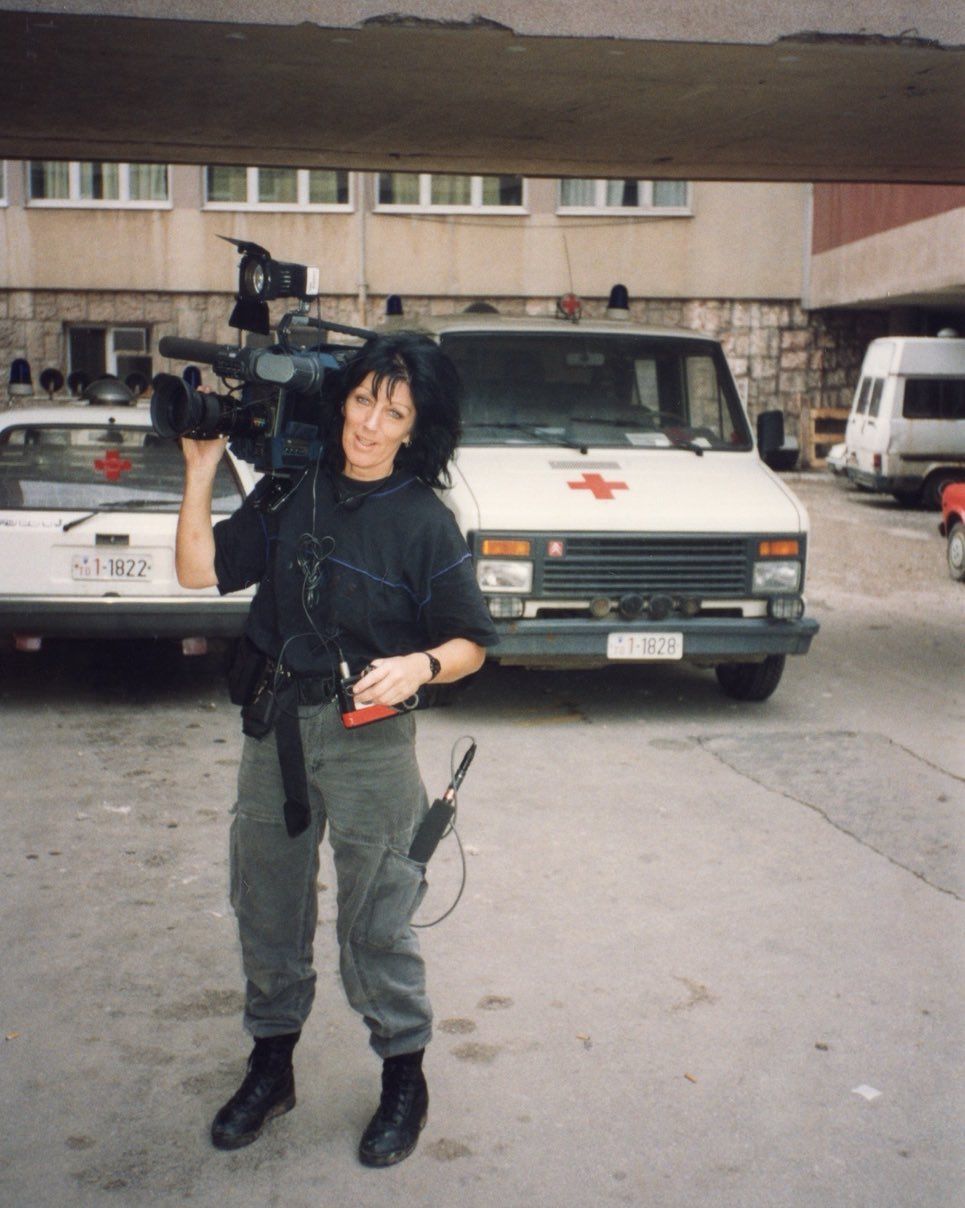 Margaret Moth in front of the hospital in Sarajevo
Moth had arrived in Sarajevo less than two months before she was shot, volunteering, as she did throughout her career, for the most dangerous postings CNN had to offer. She would crawl into the gutted upper floors of the shell-battered Holiday Inn, on what crews called the "Emmental cheese" side of the building for all its shrapnel holes, to film Serb artillery after dark with a night-vision lens, covering her camera's red "on" light with masking tape so snipers would not see it. Her colleague Stefano Kotsonis was in the vehicle with her the day she was hit. When CNN's Parisa Khosravi arrived at the Mayo Clinic to find Moth bandaged, unable to speak, and fully alert, she handed her a pen and paper. Moth, true to form, wrote back a joke: "I want to go back to Sarajevo to look for my teeth."
"I remember being there when she arrived at the Mayo Clinic. Her head was all bandaged up and she could not speak, but she was fully alert. I gave her a pen and paper and she jokingly wrote: 'I want to go back to Sarajevo to look for my teeth.'... She did not complain of the incredible physical pain and health challenges that she faced in all the years since the attack. She loved life and had no regrets." Parisa Khosravi, CNN Senior Vice President of International Newsgathering?
What followed were roughly two years and a dozen or more reconstructive surgeries, during which Moth had to relearn how to eat, drink, and speak. She also contracted hepatitis C from the emergency blood transfusion that had saved her life in Sarajevo. Through it all, friends said, she never complained and never once expressed regret about the path that had put her in the sniper's sights. "We came into their war," she told colleagues afterward. "Fair's fair. I don't blame anyone for firing at me. They're in a war, and I stepped into it." True to her word, as soon as doctors cleared her, she went back to Sarajevo — and kept working in conflict zones for another sixteen years: Lebanon during the 1996 "Grapes of Wrath" bombardments, the second Palestinian intifada and Yasser Arafat's besieged compound in 2002, Saddam Hussein's Baghdad and its fall in 2003, Chechnya, Afghanistan, Sierra Leone, Zaire.
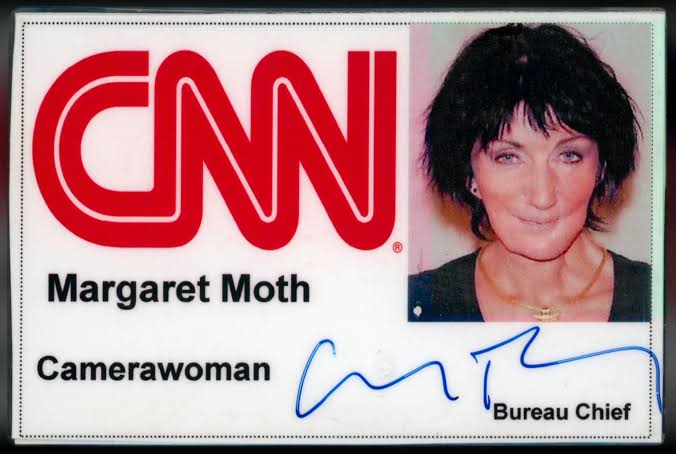
In the Arab world, where people stared openly at the scarring left by her wounds, a former CNN colleague once asked if it bothered her. It didn't, she said — she would rather people be honest and curious than avert their eyes. She refused to cover her face with a scarf. "This is me and this is what I look like," colleague Gayle Young remembered her saying. Retired Canadian general Lewis MacKenzie, who commanded UN peacekeeping forces in Sarajevo, put it more simply still.
"She was the toughest person — and I don't mean girls — she was the toughest person in Sarajevo. We admire her and we still do." General Lewis MacKenzie, former commander, UN Protection Force, Sarajevo
Christiane Amanpour, CNN's chief international correspondent, had worked alongside Moth in Sarajevo that summer and had left the city on leave days before the shooting. She flew to the Mayo Clinic and found a room she could identify only by the photograph taped to the door — Moth's bandaged face was unrecognizable, "except for her hands." Amanpour said the decision she made at Moth's bedside, to keep returning to war zones herself, shaped the rest of her own career.
"I said I'd go back, and I know to this day that if I hadn't said yes then, I probably never would have gone back, and I never would have done this career. But I said yes because I couldn't say no. We did the work for her. We did it because she was our champion, and we wanted to be her champion... She was a law and a life unto herself. She led the complete life. I don't think Margaret could ever look back and say, 'What if?' She did it to the max, and she did it brilliantly. And she did it on her terms." Christiane Amanpour, CNN Chief International Correspondent
Away from the camera, Moth rollerbladed through hotel lobbies in Baghdad, played the strategy game Go over cheap cigars, collected Victorian antiques in her Paris apartment overlooking Notre-Dame, and devoted herself to the more than two dozen stray cats she fed and sheltered at her home in Istanbul, where she eventually settled. She never married and had no children. Her closest friend and colleague, cameraman Joe Duran, said that when it became clear her cancer was terminal, what upset her most was not her own death but who would care for her cats. He moved into her Istanbul home and promised he would. "Now I can die happy," she told him.
Each of us wanted to be one of the boys... We broke news, we broke stereotypes, we broke hearts, and tonight I will drink to one of the girls." Cynde Strand, CNN Director of Coverage, International Newsgathering, in tribute to Margaret Moth
Moth was diagnosed with colon cancer in 2007. She kept working as long as she could, and spoke to a CNN documentary crew with characteristic candor the following year, as they filmed her tubing down a river in Texas and piloting a houseboat up the Mississippi with beer and Cuban cigars in hand. In September 2009 she entered a hospice in Rochester, Minnesota, and she died there on March 21, 2010, at the age of 58, with Duran at her side. As she had asked, her ashes were returned to Istanbul and placed in her garden, beside a photograph of her, so that as her colleagues put it, she could go on keeping company with her cats.
"Dying of cancer, I would have liked to think I'd have gone out with a bit more flair. The important thing is to know that you've lived your life to the fullest. You could be a billionaire, and you couldn't pay to do the things we've done. I don't know anyone who's enjoyed life more." Margaret Moth, in CNN's documentary "Fearless: The Margaret Moth Story," 2009
Moth had already been honored in 1992 with the International Women's Media Foundation's Courage in Journalism Award, the first New Zealander to receive it, and CNN's documentary "Fearless: The Margaret Moth Story" aired the year before her death. In 2024, her extraordinary life reached a new audience through "Never Look Away," a feature documentary directed by New Zealand actress Lucy Lawless, which premiered in competition at the Sundance Film Festival. Lawless, best known for playing Xena, Warrior Princess, said she was drawn to a real-life story that matched the scale of the fiction she once performed.
"She lost part of her tongue, her teeth, her beauty, her ability to speak, her standing in the world, potentially her career. [it was] an injury that would have killed a young marine. That's kind of the lesson of Margaret, that she did so much when so much had been ripped away from her." Lucy Lawless, director of "Never Look Away," CBC Radio, April 2024
While researching the film more than three decades after the shooting, Lawless's team made an eerie discovery: fragments of Moth's own shattered teeth, driven by the force of the bullet into the headrest of the vehicle she had been riding in that day, tiny porcelain shards the driver said he would occasionally find working their way out of the upholstery years later. It was, almost impossibly, the very thing Moth had joked about returning to Sarajevo to find.
"They were in the back of the driver's head. He said years later he'd be showering and go, 'What's that?' And it'd be a little, little spike of porcelain would come out and that was her teeth." Lucy Lawless, on researching "Never Look Away," CBC Radio, April 2024
In April 2026, more than sixteen years after her death, The New York Times finally gave Margaret Moth a formal obituary as part of its "Overlooked" series, which honors remarkable people whose deaths went unreported by the paper at the time. For those who had worked beside her in Sarajevo, Baghdad, Gaza, and a dozen other front lines, the recognition, like so much else in her life, arrived on Moth's own improbable timeline, long after she had already proven, in the words of her colleagues, that she had lived more completely than almost anyone they had known.
New Zealand's first television news camerawoman and a pioneering CNN war photojournalist for two decades. Returned to Sarajevo and continued covering conflicts worldwide for 18 more years after being shot. First New Zealander to win the International Women's Media Foundation's Courage in Journalism Award, 1992. Subject of CNN's documentary "Fearless: The Margaret Moth Story" (2009) and Lucy Lawless's Sundance documentary "Never Look Away" (2024). Died of colon cancer on 21 March 2010, in Rochester, Minnesota, aged 58. Honored posthumously by The New York Times' "Overlooked" series in 2026.
She was fearless, to the end. Camerawoman, CNN, 1990–2010. Shot and gravely wounded on Sniper Alley, Sarajevo, July 1992. Returned to cover wars worldwide for 18 more years. Remembered in "Fearless: The Margaret Moth Story" (2009) and Lucy Lawless's "Never Look Away" (2024).
MARGARET MOTH was born Margaret Wilson,
on 21 August 1951, in Gisborne, New Zealand.
Shot got shot on 23 July 1992 in infamous Sniper Alley in Sarajevo, Bosnia and Herzegovina. She was hit in the face by a Serb sniper while riding to the city's airport for CNN; survived after emergency surgery and years of reconstruction. Margaret passed away on 21 March 2010.
__