
Martin "Marty" Sugarman was an American photojournalist, sociologist and former professional surfer who left a sun-bleached life on the California coast to document the war in the former Yugoslavia, producing some of the earliest independent photographic records of the siege of Sarajevo and the wider conflict in Bosnia-Herzegovina and Croatia.
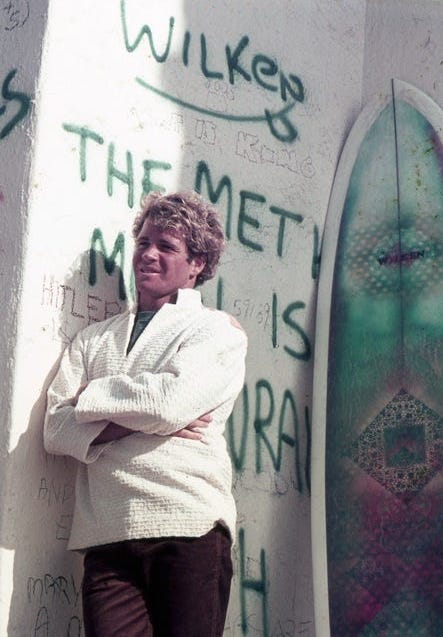
Wilken Meth Model Photo: Rich Wilken Collection
Born in Los Angeles, Sugarman had already lived several lives before he ever picked up a camera on a battlefield — a champion surfer who won the 1965 LA County Surfing Championship, a painter, a radio news director, and co-founder of the cult waterfront-culture magazine H2O. It was not until 1992, after a trip documenting rural poverty in Mexico, that Sugarman — then in his mid-forties — turned his lens toward war. He first traveled to Croatia and Bosnia-Herzegovina that June, and what he saw compelled him to keep returning.
"I came back here for about three weeks and looked at the film and realized I had to go back," he said of his first trip into the conflict.
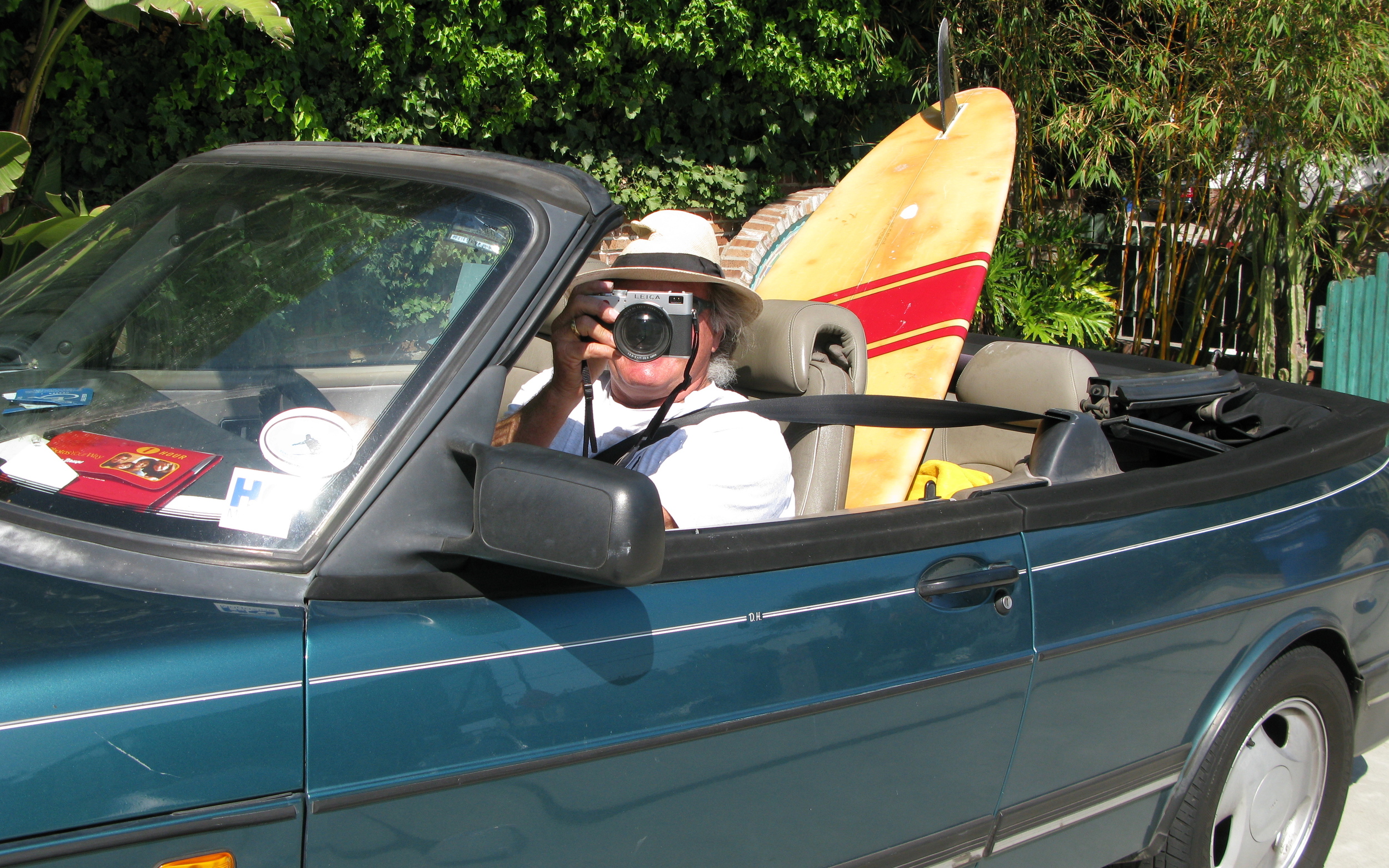
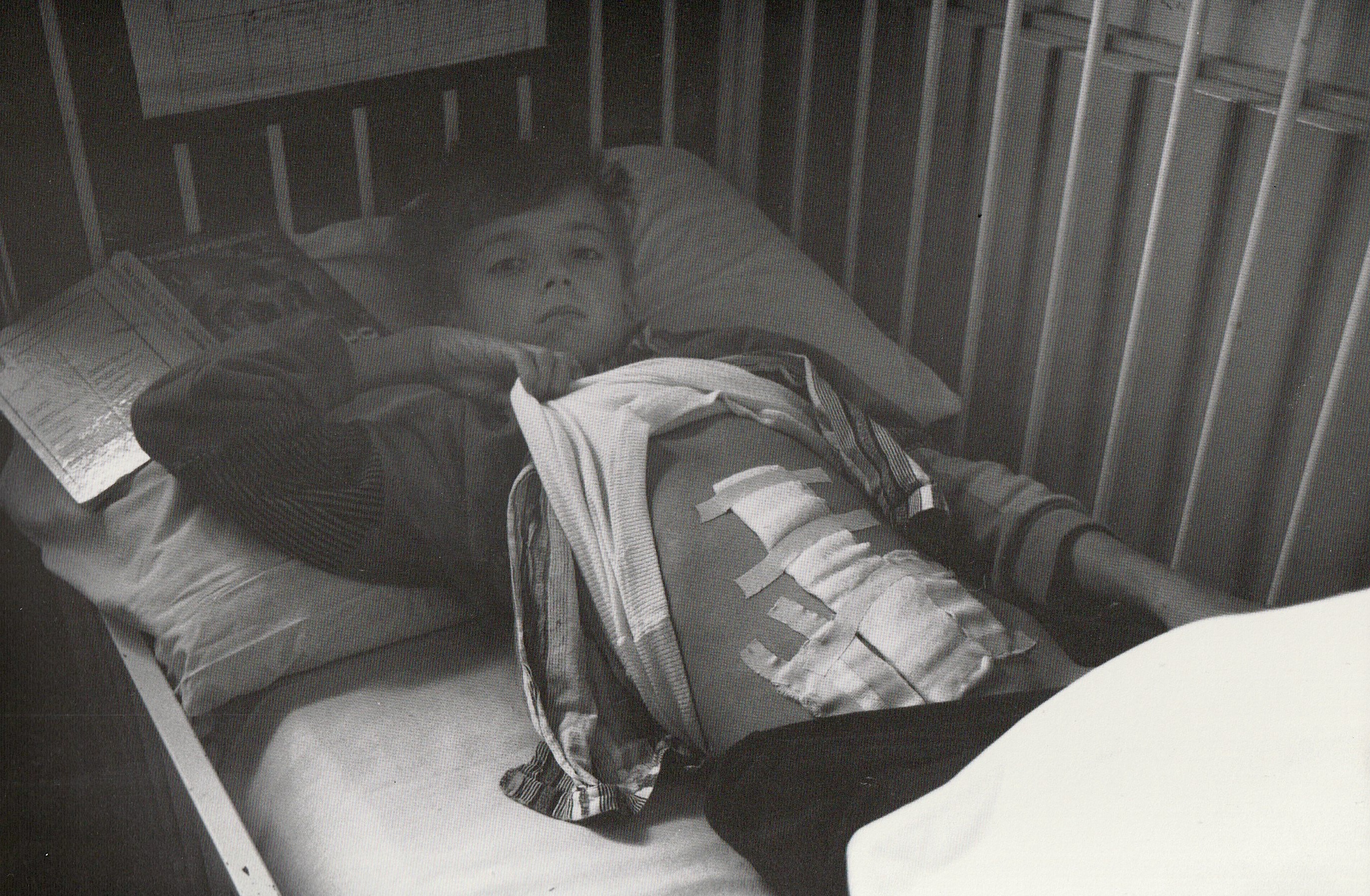
Over the following months he made repeated journeys into the war zone, working largely independently of major news organizations, photographing soldiers at checkpoints, children playing amid the rubble, and the slow, grinding toll the siege took on ordinary civilians trying to hold onto daily life. He photographed in full-frame black and white, in a style reporters compared to Cartier-Bresson and the great Life magazine photo essayists, deliberately placing images of normalcy — children laughing, families gathering — beside the rawest evidence of destruction. Asked how he could walk into shelling and sniper fire that kept professional correspondents pinned down, Sugarman gave an answer that startled interviewers with its plainness: "To tell you the truth, I didn't feel in danger. Maybe I'm stupid, or blind... I don't know. I just felt the situation was extreme, but I never felt that my life was in danger."
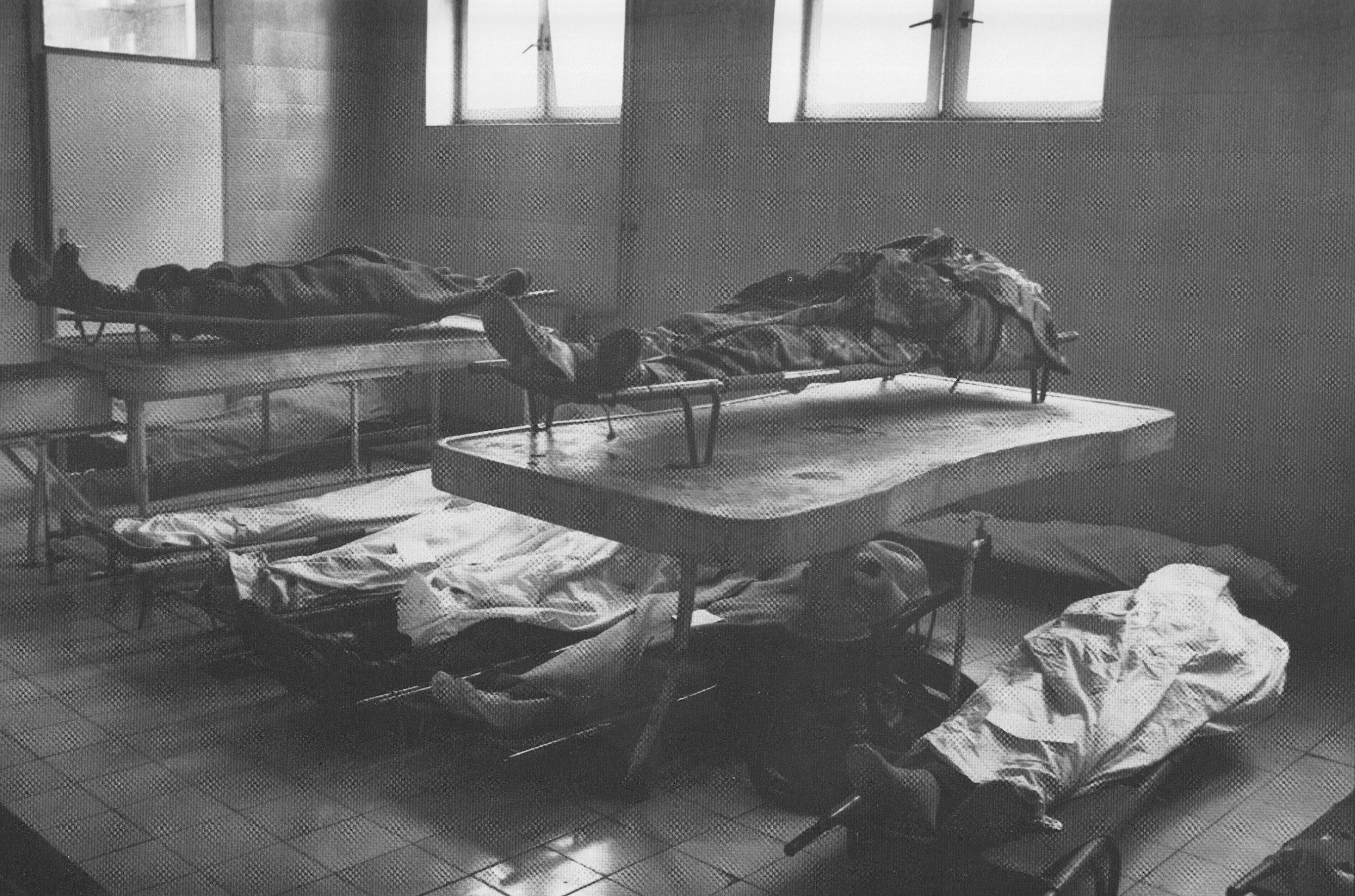
"I don't think the American public has a full understanding of the conflict. This is genocide." — Los Angeles Times, "War: Photographer Under Fire in Balkans," Oct. 1, 1992
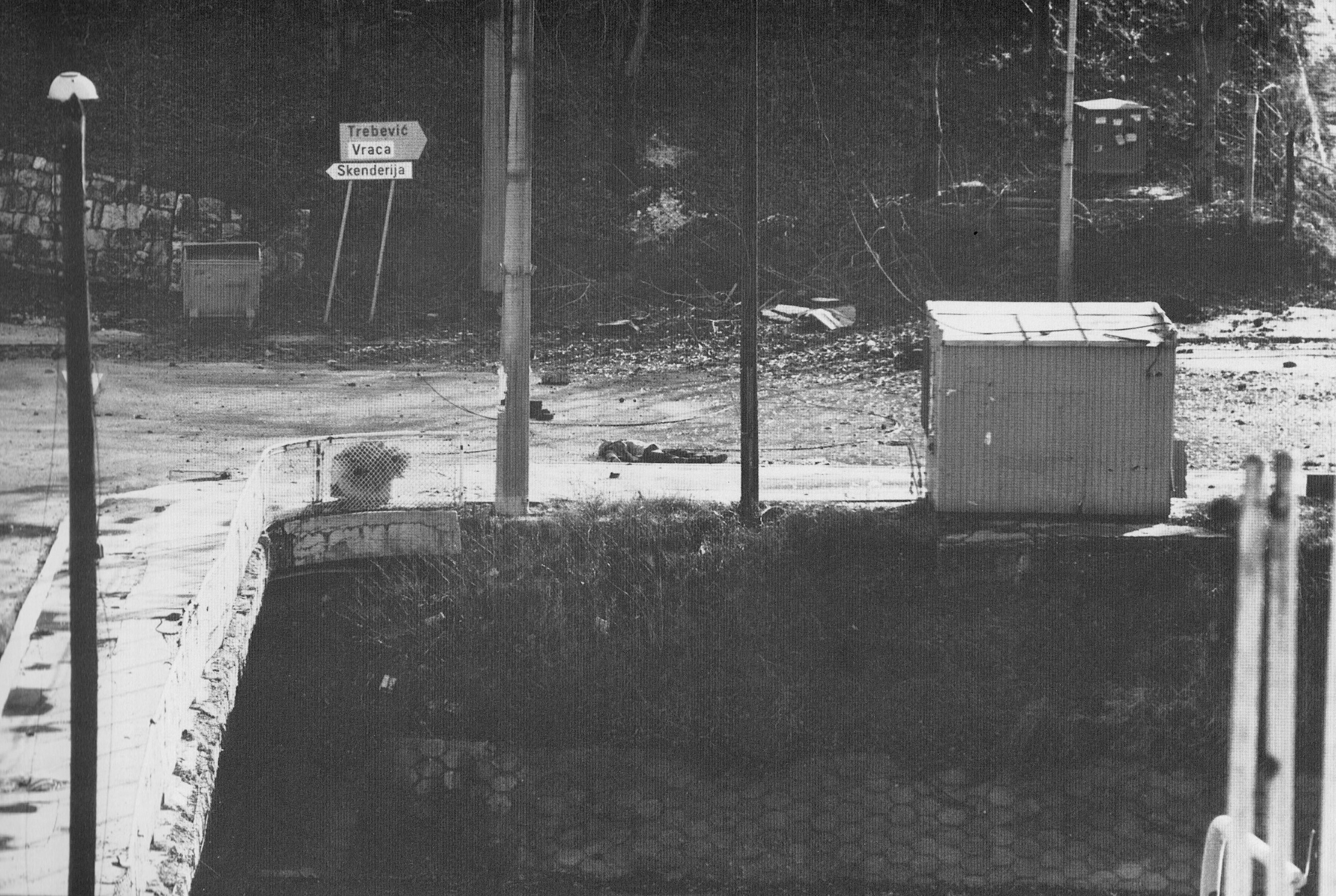
Murdered civilian during the Siege of Sarajevo.
Photo by Martin A. Sugarman
He was more candid about the unease of returning, between trips, to an untouched California — surfboards, sunshine, a life utterly unmarked by what he had just witnessed. "Yes, I do feel guilty," he admitted. "But not if I can do something with these photographs so the world can know what is going on there. Maybe it can help."
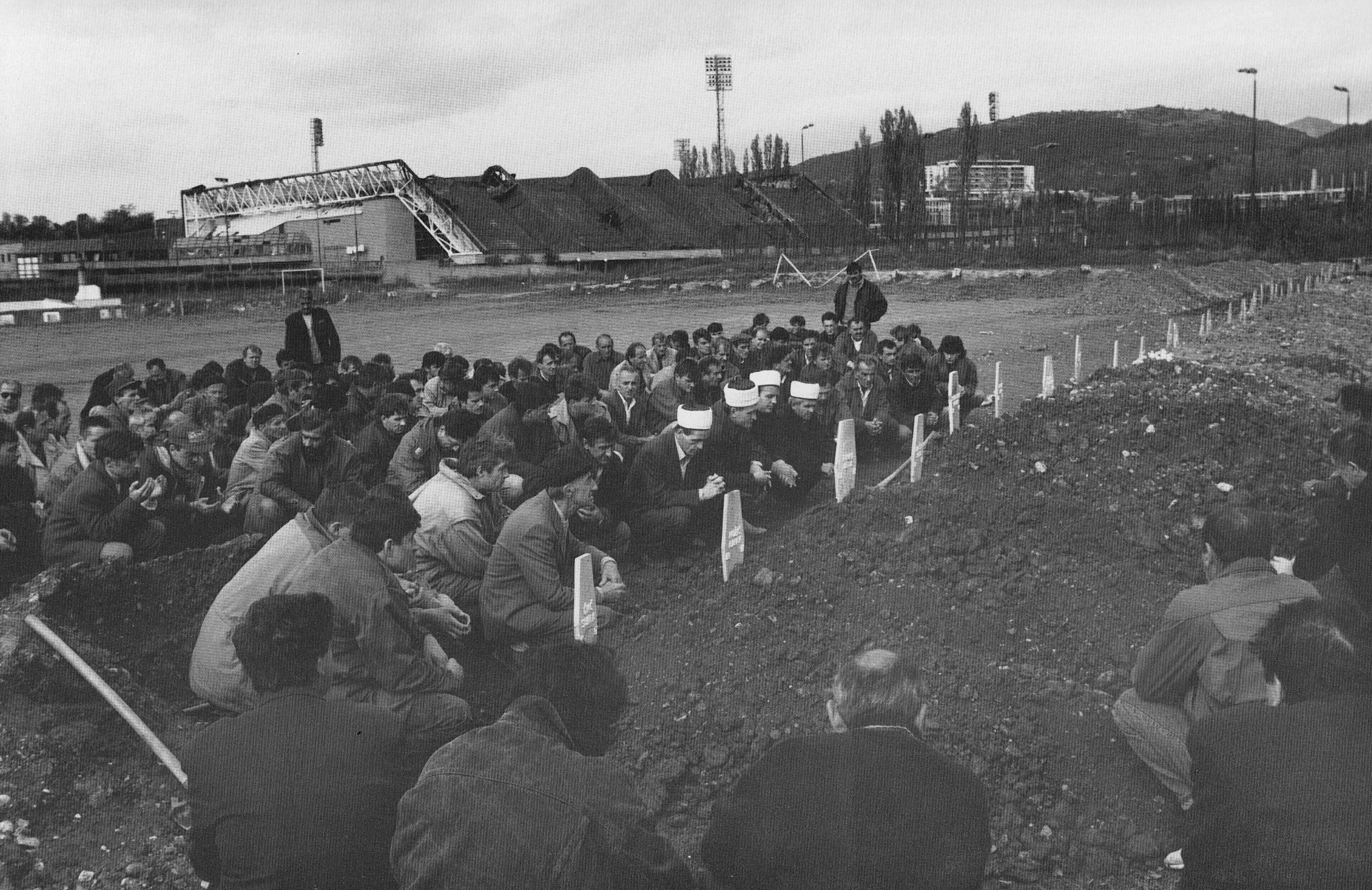
"The ski jump, everything was there... The Serbians had bombed the soccer fields and the basketball court. They were totally pockmarked with shells, but it was like being in an alpine village. It was beautiful." — describing the 1984 Winter Olympics venues above Sarajevo, now a frontline military position.
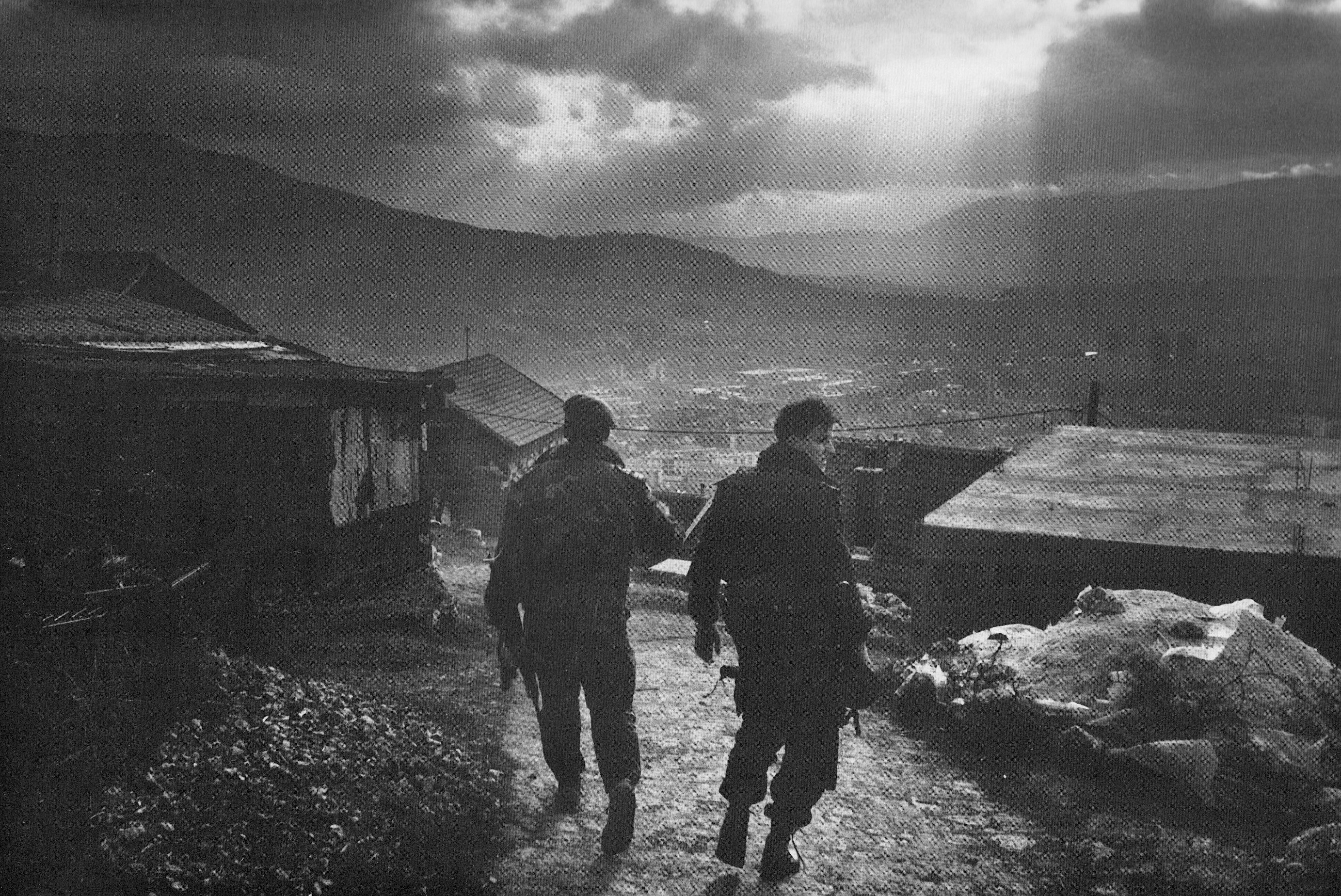
That conviction — that bearing witness was itself a form of intervention — became the organizing idea of his work. Rather than wait years for an East Coast publishing house to take on his material, Sugarman founded his own imprint, Sugarman Productions, and in 1993 released God Be with You: War in Croatia and Bosnia-Herzegovina, a book that juxtaposed full-frame images of ordinary life with the brutal aftermath of ethnic war. His friend, historian and war-crimes investigator Peter Maguire, later wrote that in the book Sugarman "captured humanity's good, bad, and ugly in a way that was both personal and humane." That same year, his Bosnia photographs were exhibited at Occidental College in Los Angeles under the title Victims of War in Bosnia-Herzegovina, and were distributed to news organizations and human rights groups working to bring attention to the siege.
"God be with you." — the parting words of a Croatian border guard as Sugarman crossed into the war zone; he later used the phrase as the title of his book, God Be With You: War in Croatia and Bosnia-Herzegovina
Sugarman described his method as instinctive rather than calculated — a belief that an honest image, allowed to stand largely on its own, carried more moral weight than any accompanying rhetoric. "I pretty much rely on instinct when I seize the moment, interpretation comes after," he said. "I believe that cogent images with significant content permit events to speak for themselves in the venerated tradition of documentary and reportage photography." At the same time, he insisted his photographs needed context, pairing them with his own written narration so viewers understood the history behind what they were seeing — photography, he believed, documented "the breakdown of social institutions and violations of human rights," even as he maintained it "should not be solely a department of politics."
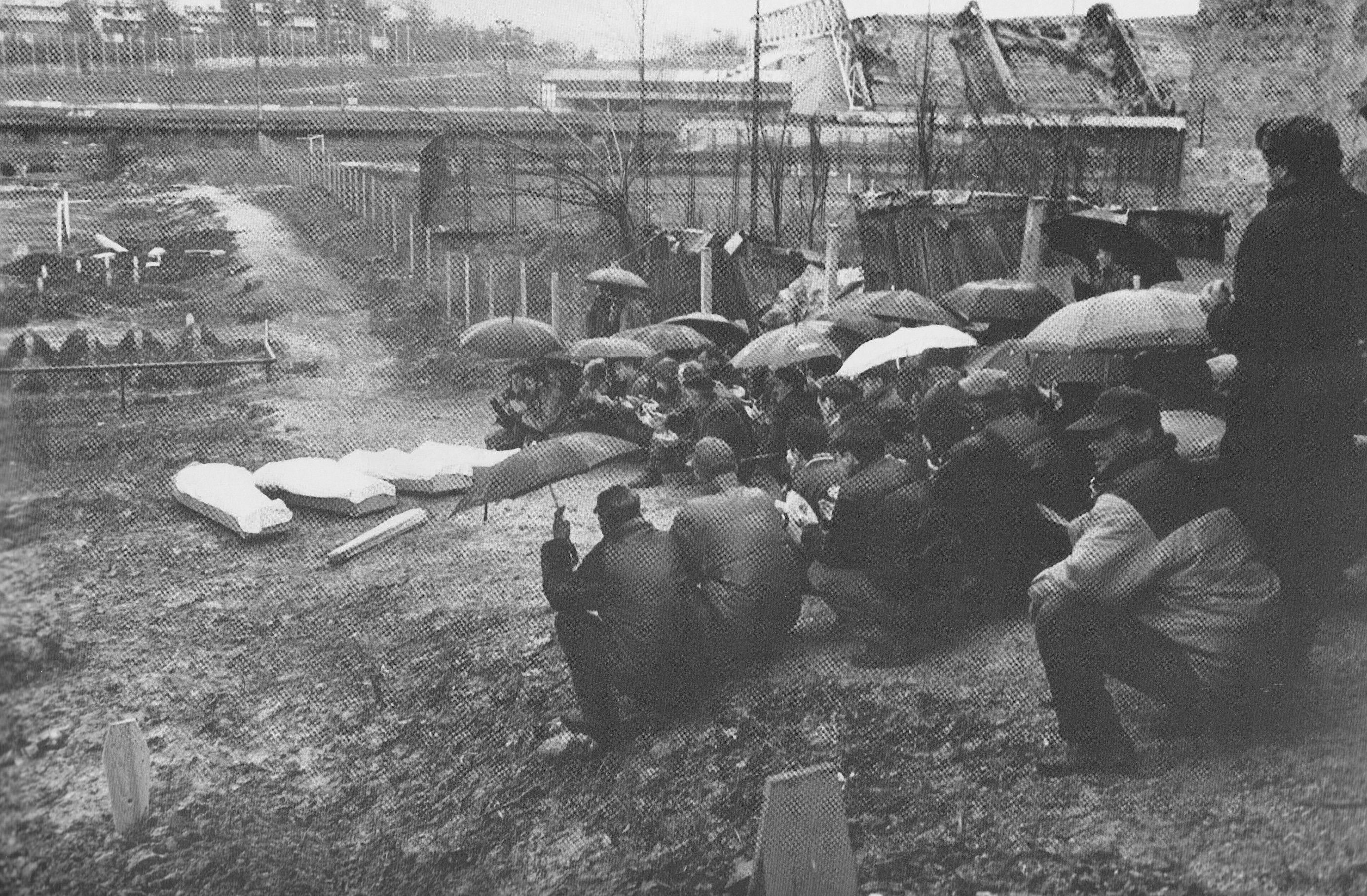
People take cover from Serb sniper fire while attending a funeral at Koševo Stadium — a pitch used for football with the 1984 Winter Olympics venue winter wall behind, repurposed during the war as one of Sarajevo's few remaining burial grounds.
Sarajevo marked the beginning of more than a decade on the frontlines of the world's conflicts. Sugarman went on to document Kashmir, the Siachen Glacier, Cuba, the Palestinian territories, Chechnya, Tibet and Afghanistan, publishing further photo books along the way. But those who knew him said Bosnia never left him. Peter Maguire, who met Sugarman in those years, recalled the particular bond forged between people who had witnessed the same horrors: "Because we had both stared into the same abyss where the heart and the mind sometimes part company, we talked openly about the personal toll that bearing witness had taken on both of us... we agreed that if one wanted to be an engaged intellectual, this was the price of admission."
Maguire remembered Sugarman as someone whose courage on the ground matched his conviction behind the camera: "Marty Sugarman here has done lots of frontline work. He did remarkable work on the Siachen Glacier and has been in many hotspots equal, if not more extreme than anything I have ever seen." https://petermaguire.substack.com/p/marty-sugarman
Sugarman eventually stepped back from the frontlines, returning to California, completing a Ph.D. in sociology at UCLA in 2001, and devoting his later years to painting — much of it seascapes — and to the surf culture that had shaped his youth. He never spoke of his war reporting as heroics; he treated it, consistently, as an obligation met.
MARTIN A. SUGARMAN was born in 1947 in Los Angeles, California.
He passed away in September 2021, at the age of 74, after a long battle with Parkinson's disease.
__
Special thanks to Peter Maguire