
Mohsen Rastani, the Iranian documentary photographer whose black-and-white portraits of ordinary Sarajevans against a plain white sheet became one of the most distinctive visual records of the besieged city, died on October 25, 2026, after a long illness that included a battle with cancer affecting multiple organs. He was 67. News of his death was announced by Iran's National Photography Association and the Iranian Cinema Photographers' Union, which called him "one of the influential figures in Iranian documentary and social photography" and mourned a career that had already carried him through three wars before he ever reached Bosnia.
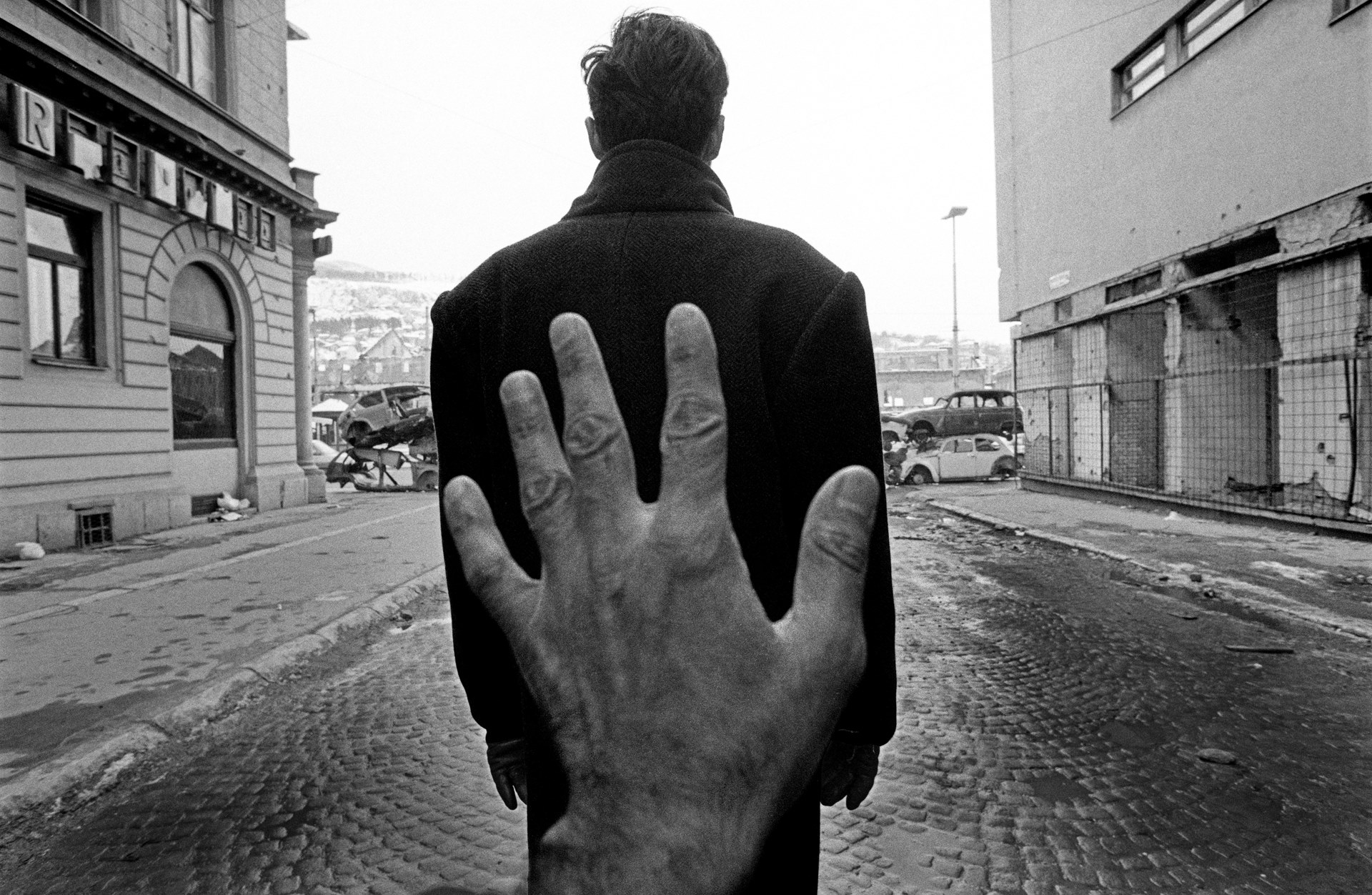
Photo © Mohsen Rastani
Rastani was born on 27 December 1958, in Khorramshahr, a port city in southwestern Iran on the border with Iraq. He was an eighteen-year-old preparing for university entrance exams in Tehran when the Iran–Iraq War reached his hometown; Khorramshahr endured a brutal 45-day siege and was roughly 85 percent destroyed by the time Iraqi forces occupied it. Rastani returned to the ruined city shortly after its liberation in 1982 and picked up a camera for the first time, at the urging of a friend who handed him a fourth-hand camera and told him simply to photograph the young men defending their homes "so their faces would not be forgotten." He had no training and knew nothing about weapons or photography, he said "but we had to defend ourselves. My camera became a weapon for peace." He went on to earn a BA in photography from the Faculty of Fine Arts at the University of Tehran in 1987, later lecturing there himself, and in the years that followed photographed the Lebanese Civil War before war found him for a third time: Sarajevo.
"I don't think I can call myself a photographer. When people ask if I am one, I say: 'No, I'm not. I just have a camera.' Because being a photographer isn't easy. You have to have your own style, one that sets you apart, so that no one else could make the photograph you make. Only then can I be called a photographer. To this day, I haven't fully reached my own style. It's very difficult." Mohsen Rastani, interview with !Odgovor, June 2026
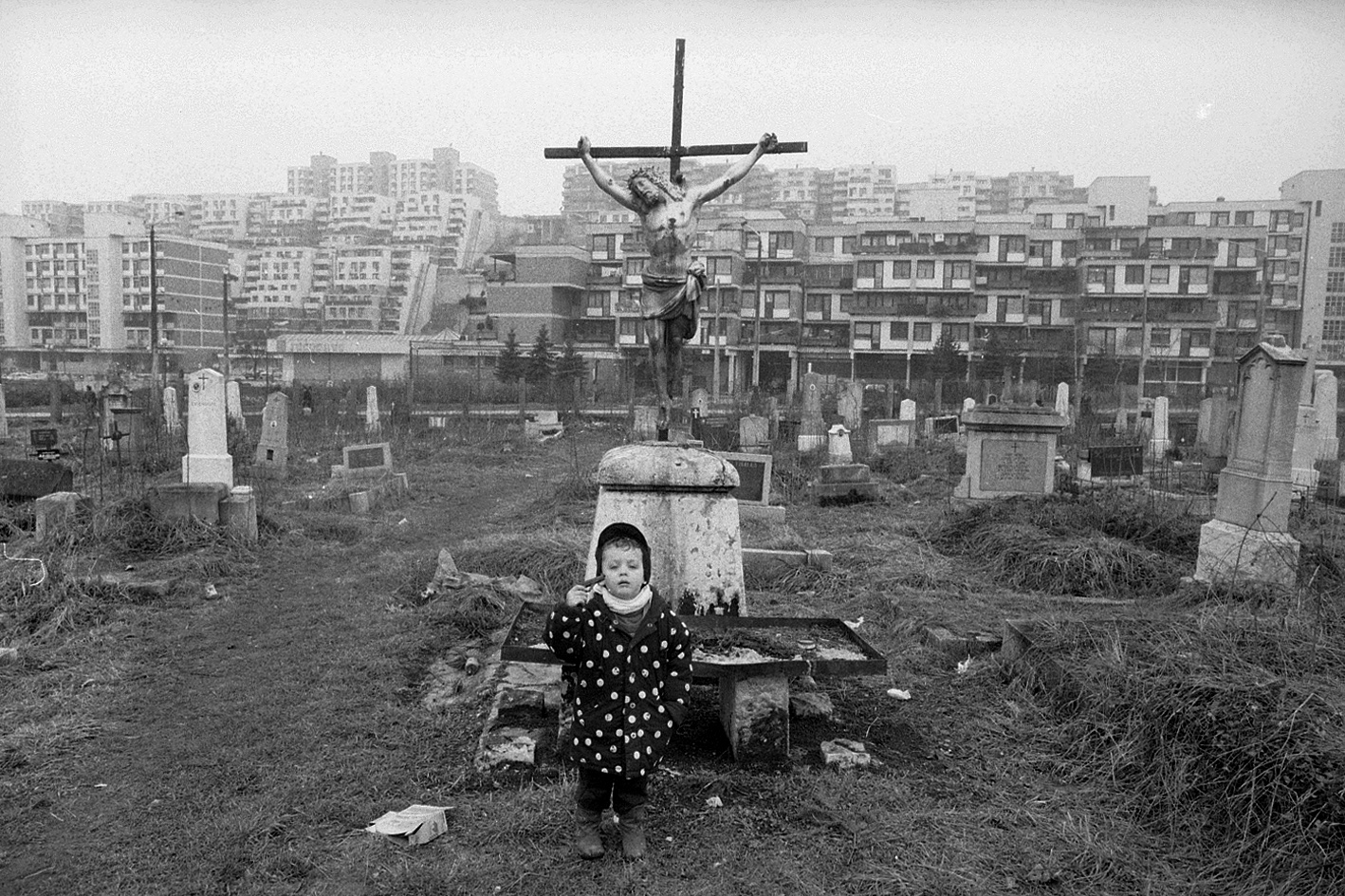 Photo © Mohsen Rastani, from his book "The Hard Time."
He arrived in Bosnia in 1994 with almost nothing. To cover the cost of the journey, he sold two Persian carpets from his family's home in Iran, trusting the rest, he said, "to God." He traveled by train from Paris to Zagreb, talked his way onto a United Nations military transport, and landed on Sarajevo's shelled and cratered airport, where he spent his first night alone in an abandoned trench before, the next morning, running into an old colleague he had known from the Lebanon war. Through him, Rastani found a room to rent for 100 Deutschmarks a month with a widow the neighborhood called "Mama Ziba" and her son Zlatko, near Marshal Tito Street in the city center, a home base he kept, on and off, for roughly two and a half years, through the heart of the siege and the first postwar elections.
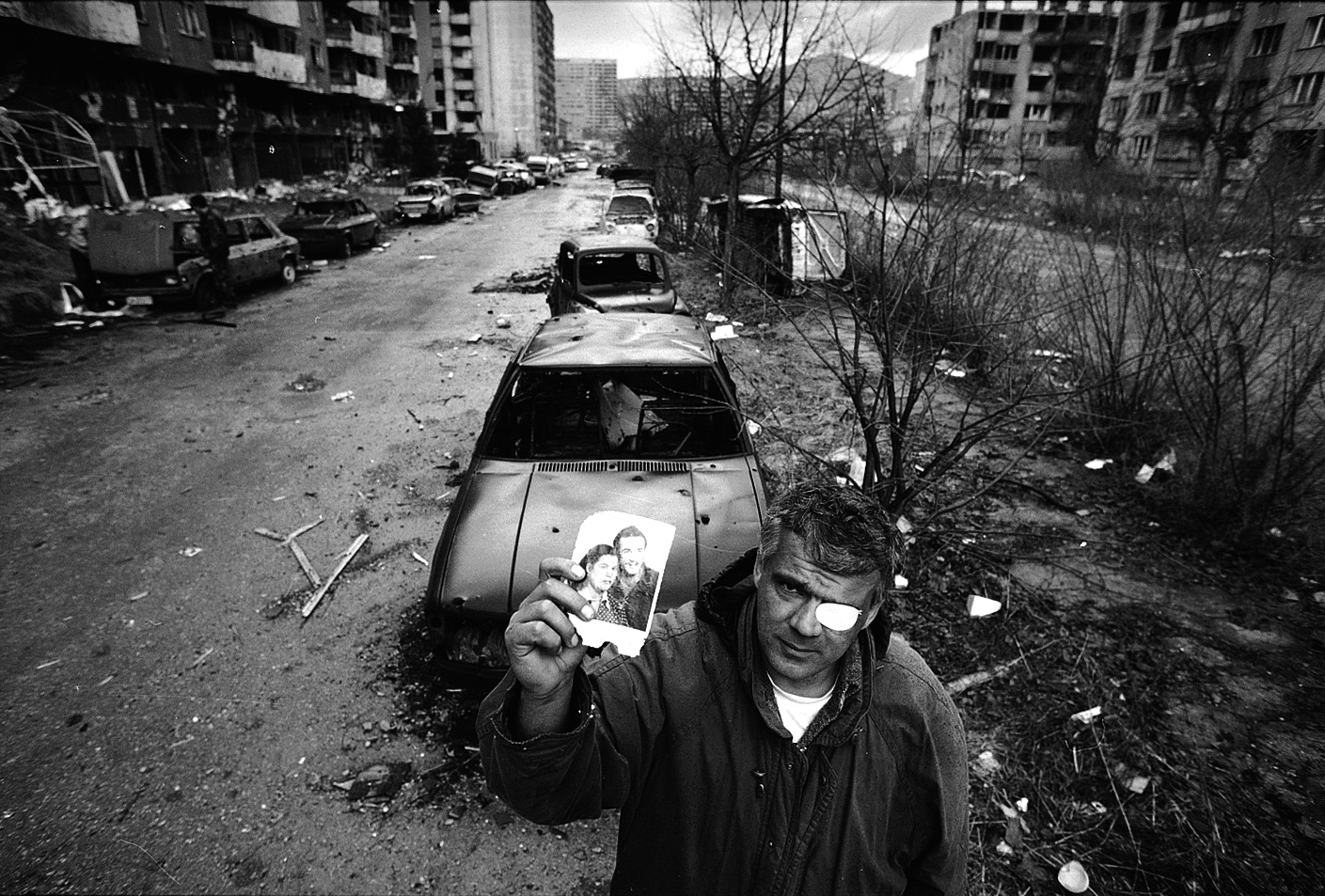 Sarajevo, Grbavica. "People looking for their beloved ones by showing their pictures," Rastani wrote of this image, made after the district's liberation. Photo © Mohsen Rastani, from his book "The Hard Time."
Not long after he arrived, the film-advance mechanism on his old camera broke, and he was told there was no way to repair it in a city under siege it would have to be sent to Germany. Desperate, he was introduced to a Bosnian watchmaker who agreed to try. "I have to make this part by hand," the man told him, "I have a special small tool." He fixed it, and when Rastani asked what he owed him, the man refused payment. "You came to our country to help us," he said. "I have to help you." Rastani later asked the same man to build him something else: a large white banner on a frame, which he could carry into hospitals, streets, and army camps to make medium-format portraits of the people he met. That hand-made white backdrop, bought with cloth from the local bazaar, built by a man whose name Rastani, to his lasting regret, eventually forgot became the signature of his life's work.
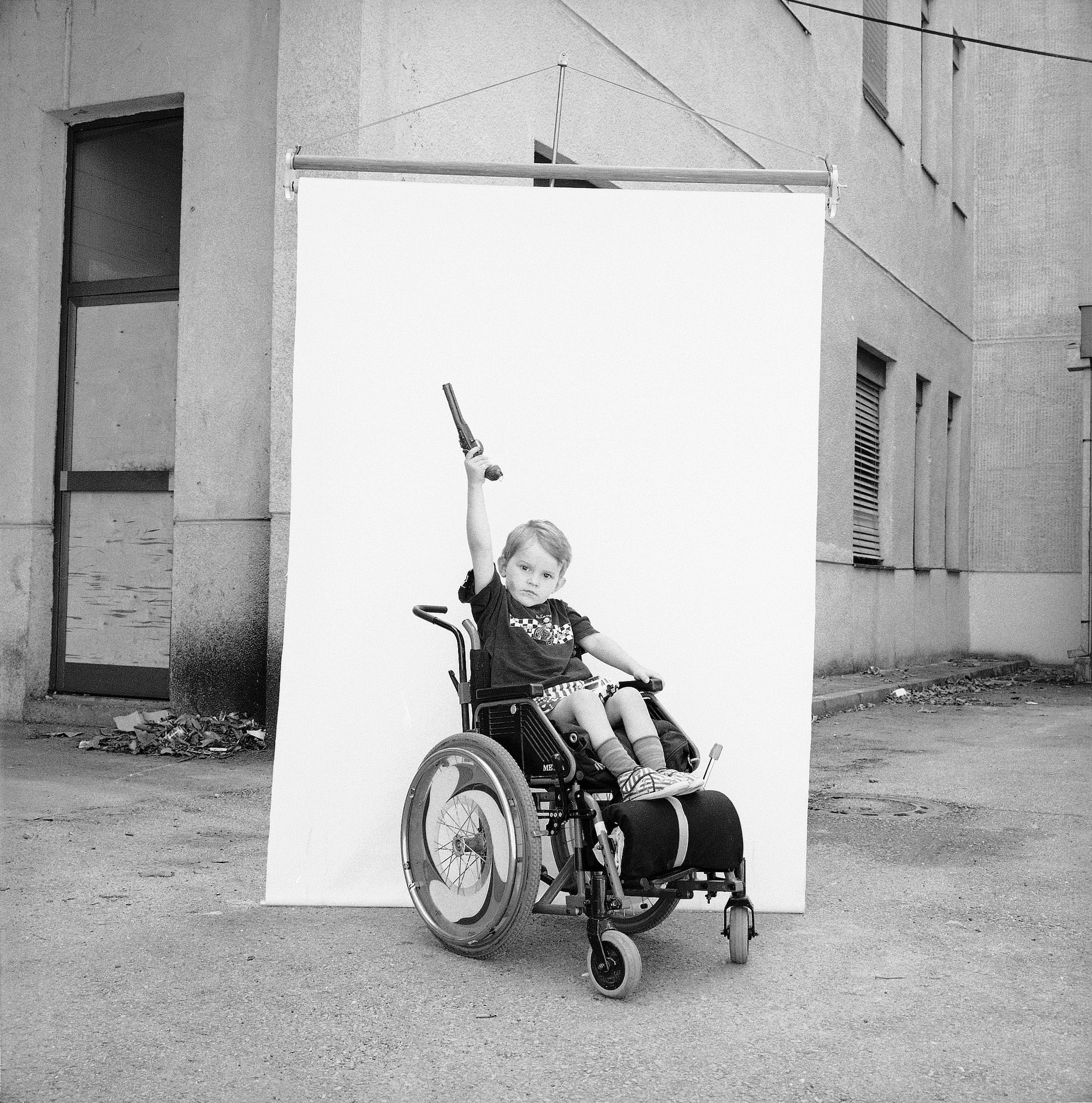 A wounded boy, photographed against Rastani's signature white backdrop during the siege. Photo © Mohsen Rastani, from his book "The Hard Time."
"We usually see people through their surroundings, their real background. But when I put you in front of a white backdrop, in an empty space, all the focus is on your character. I wanted to record pure reality and emotion on their faces. I would ask them: 'Forget about me, forget about the camera — only you are here.' That's why those portraits are so powerful. When people look at them today, they fall silent and just watch." Mohsen Rastani, on his signature white-backdrop portraits, interview with !Odgovor, June 2026
Rastani photographed soldiers and civilians, the wounded in hospital wards, families searching for missing relatives by showing strangers their photographs amid the wreckage of Grbavica, and, above all, children whom he returned to again and again because, he said, they were the most unprotected and the least able to make sense of what was happening around them. "Imagine a child of four or five watching such horrific events with his own eyes," he said. "He cannot understand what it is. To him it is a nightmare, a film. And he has no protection except holding on to his mother and father." His black-and-white studies of Sarajevo's families, young and old, standing together against his plain white sheet, carried the same unadorned intimacy that had already made his long-running "Iranian Family" project, a decades-long study of ordinary households back home one of the defining bodies of work in postwar Iranian documentary photography, exhibited at the Musée d'Art Moderne de Paris and the Venice Biennale.
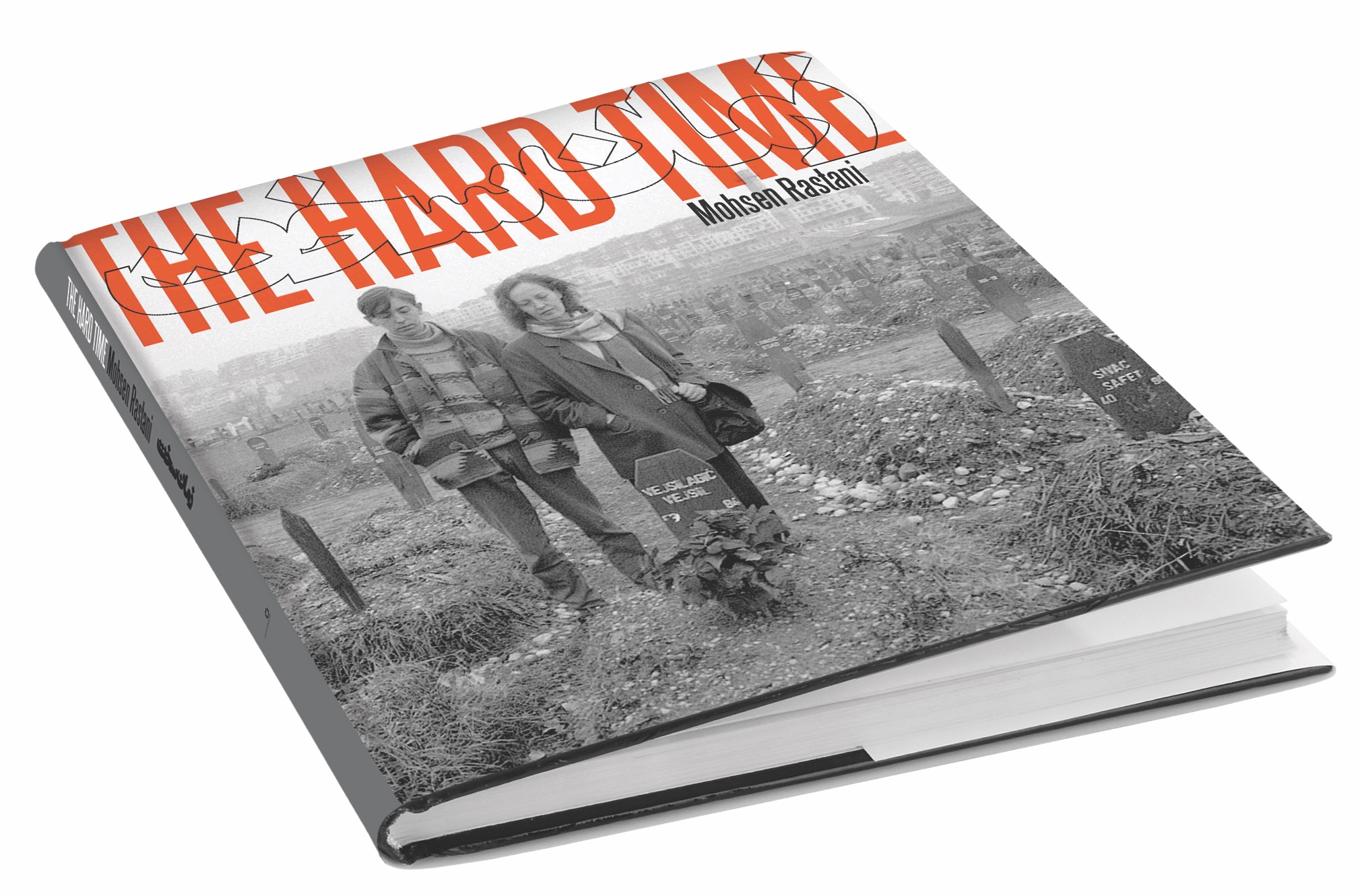
In 2016, Rastani gathered his Bosnian photographs into a book, The Hard Time, published in Tehran by the Sacred Defense and Revolution Photographers Society, 204 pages, bilingual in Farsi and English, with a foreword by the critic Mehran Kashani, who wrote that looking at Rastani's war photographs felt like staring into Nietzsche's abyss. In his own introduction, Rastani wrote with unflinching honesty about what the assignment had cost him: the long separations from his young daughter, the negatives he could not develop himself for want of chemicals and clean water in a besieged city, the dangling body of a woman he once saw hanging from a tree, the terminal silence of a man shot dead in front of him. "I am of a generation that pursues social issues as a priority," he wrote. "One cannot escape such a nightmare."
"Mohsen is a man with no relation to war, not in his mind, not in his language, not in his behavior or interests. Undoubtedly, 'peace' is his only share of 'war' photography. He is a man of peace, flowers and smile." Mehran Kashani, foreword to "The Hard Time," 2016
Rastani returned to Sarajevo thirty years after the war, in June 2026, for "Standing to Remember: Sarajevo 1994–1996," a sixty-photograph exhibition of his Bosnian work mounted at the Sarajevo Memorial Center in Kovači by the WARM Foundation, the University of Sarajevo, and the Canton's Ministry for Veterans' Affairs, curated by Lejla Hodžić and organized in part through photojournalist Damir Šagolj, whom Rastani called a friend he deeply admired. By then he was living in Nürnberg, Germany, with his wife, cellist and music professor Eilin Herrmann, who traveled with him and witnessed what came next: a chance reunion with Denijal Bašić, a Sarajevo lawyer who, as a five-year-old boy in Alipašino Polje, had posed for Rastani's camera in a game of swinging a jacket over his head. Bašić had searched for the photograph online for years without success; it surfaced only when his brother-in-law spotted it on the gallery wall. The two men met, toured the spot where the picture had been taken three decades earlier, and recreated it together.
https://warmfoundation.org/projects/standing-to-remember-sarajevo-1994-1996
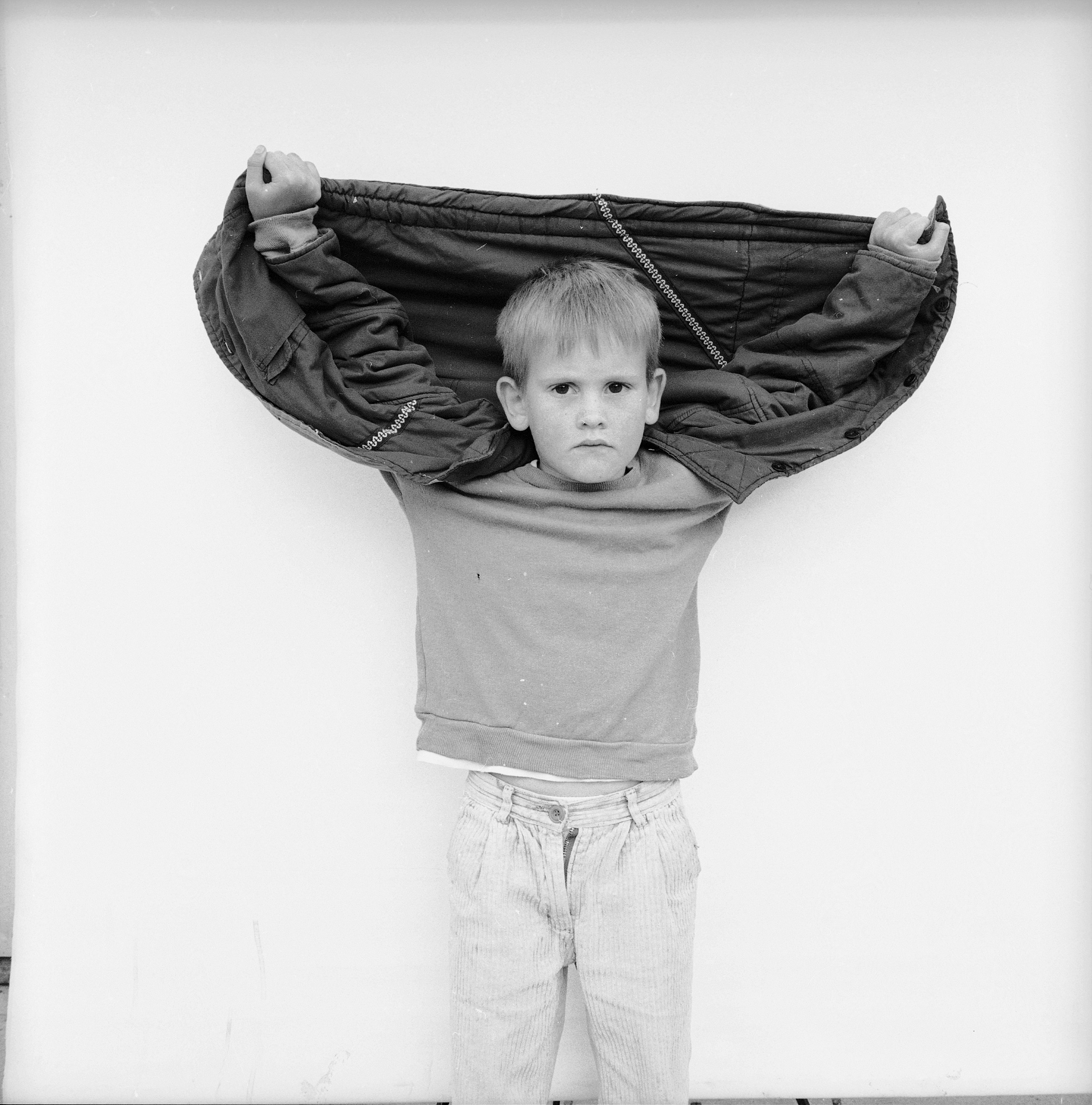
"One day, a man with a pleasant smile and appearance arrived. He remained etched in my memory because of his pearly white teeth and dark skin tone. He is Iranian. He approached us, the children, with a large backdrop he used as a background, which we found interesting." Denijal Bašić, on first meeting Mohsen Rastani as a child in besieged Sarajevo, Sarajevo Times, June 2026
Already unwell during that visit, Rastani spoke candidly in interviews about the cancer he was fighting, and said the trip back to Sarajevo and the people who remembered him, had given him strength to face it. "I think all citizens of Sarajevo should visit this exhibition," Bašić said afterward, "as Rastani has done a lot for this city. He documented many events." Asked what he had hoped to capture through his lens across a lifetime spent photographing people in crisis in Khorramshahr, in Beirut, in Sarajevo, Rastani answered not as a war photographer but as someone who had simply tried to understand what war reveals about the people caught inside it.
"In normal life you cannot fully understand a person. But in war, people show you all those hidden, deepest layers of their character. I have always been most interested in observing and understanding people in moments of crisis. Their character in a healthy environment, when there is no illness and no war, often stays hidden."
Mohsen Rastani, interview with !Odgovor, June 2026
https://odgovor.ba/article/pogledi/17733/
He never stopped working, even as his illness advanced, telling the Bosnian outlet !Odgovor just months before his death that photography remained, for him, something close to a cure. "My character, my soul, and photography help me," he said. "Photography saves me, today it is like medicine for me." He is survived by his wife, Eilin Herrmann, and his daughter, who as a nine-year-old girl in Iran waited months at a time without word from her father while he lived among strangers in a besieged city, carrying a camera and a borrowed white bedsheet, trying, in his own words, to photograph not the war but the human beings who endured it.
MOHSEN RASTANI was Iranian documentary photographer and photojournalist; BA in photography, University of Tehran, 1987. Photographed the Iran–Iraq War, the Lebanese Civil War (1988–1990), and the Bosnian War in Sarajevo, Tuzla and Mostar (1994–1996). Sold two Persian carpets to fund his journey to besieged Sarajevo, where he lived for roughly two and a half years making portraits against a hand-made white backdrop. Author of the photo book "The Hard Time" (Tehran, 2016), documenting the Bosnian war. Exhibited at the Venice Biennale (2011), the Musée d'Art Moderne de Paris (2014), and MAXXI Rome (2015), among others. His Bosnian photographs were shown in Sarajevo for the first time in "Standing to Remember: Sarajevo 1994–1996" at the Sarajevo Memorial Center, June 2026.
Survived by his wife, cellist Eilin Herrmann, and his daughter.
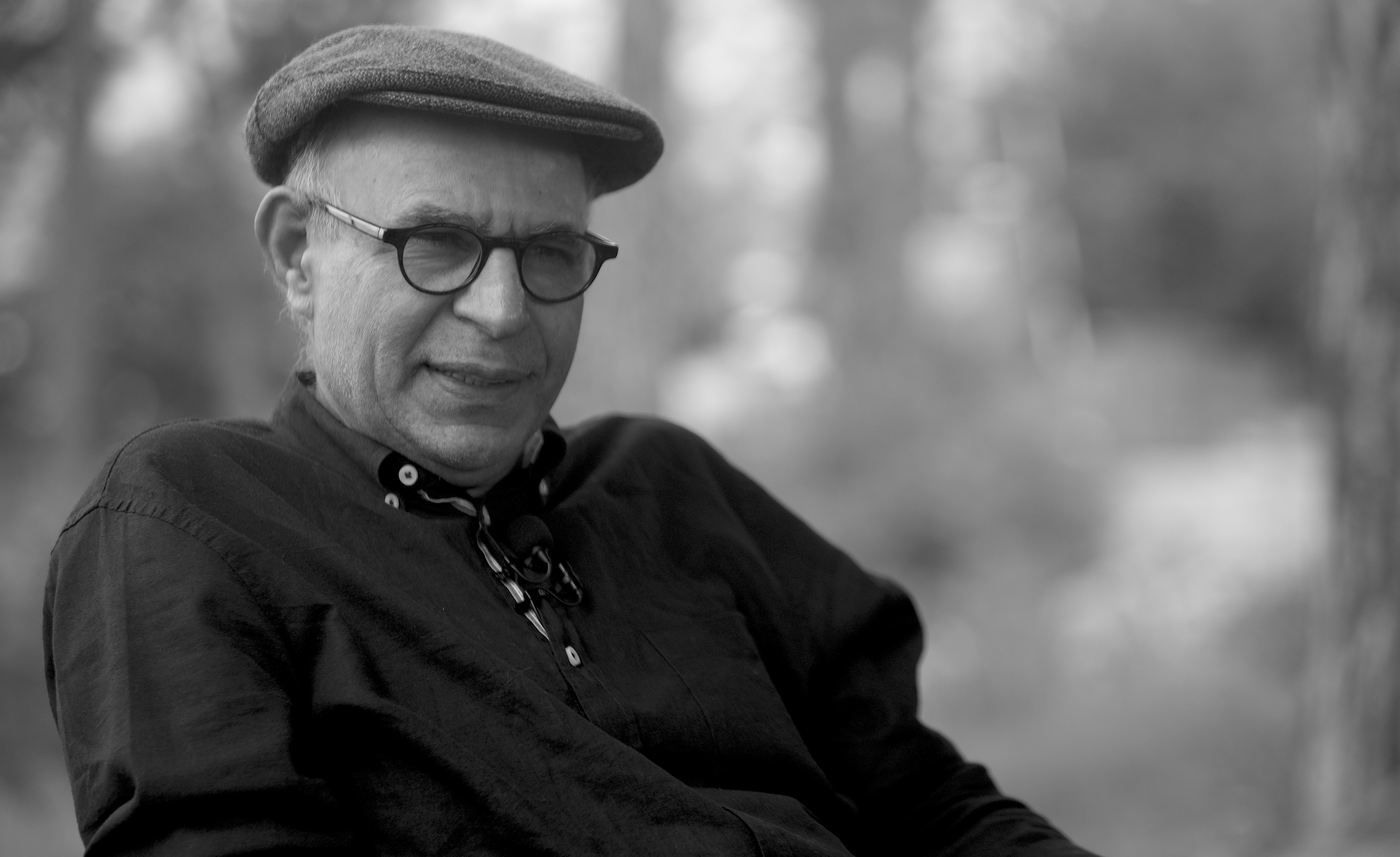 Photo © Emir Jordamović
MOHSEN RASTANI was born on 27 December 1958, in Khorramshahr, Iran.
He passed away on 25 October 2026, in Iran, aged 67, after a long illness.
__
Cover photo by Emir Jordamović
Special Thanks to Adem Dedić and Odgovor.ba
Thanks to Denijal Bašić