
William "Bill" Haglund was an American forensic anthropologist and death investigator whose work exhuming the mass graves of Srebrenica turned soil, bone and cloth into evidence that would help convict the architects of genocide in Bosnia. A former mortician, death investigator and Green River serial-killer case veteran who reinvented himself in his fifties as a human rights investigator, Haglund led the team that excavated some of the largest mass graves ever examined for forensic purposes, and later carried that evidence into the courtroom at the International Criminal Tribunal for the former Yugoslavia, testifying against Radovan Karadžić and contributing to the convictions of both Karadžić and Ratko Mladić.
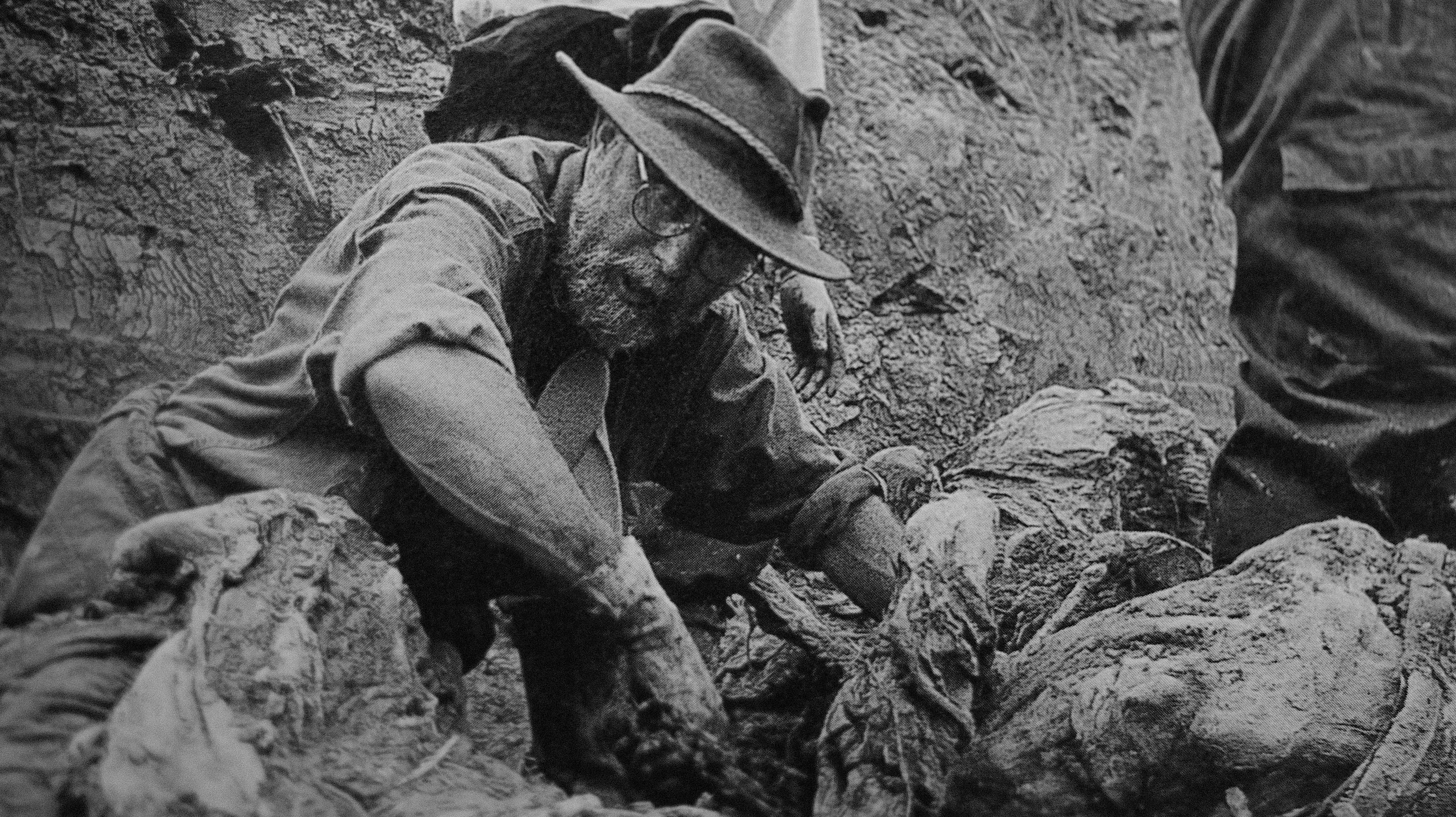 William Haglund in Srebrenica, photo taken by Gilles Peress - from the book 'Graves'
Born on 26 April 1943 in Duluth, Minnesota, Haglund had a childhood marked by poverty and instability. His parents separated before his birth, and he was raised partly by grandparents in Baker, Oregon, before being effectively homeless for a time as a teenager. While he was in his late teens, his mother was stabbed to death in a Duluth bar, a loss he would later describe as the impetus for his life's calling. A local funeral director in Baker found the teenage Haglund sleeping in the movie theatre where he worked and offered him a room at the funeral home in exchange for learning the undertaking trade. That chance encounter set his career in motion: Haglund trained at the California College of Mortuary Science, earned a bachelor's degree in biology from UC Irvine in 1969, and worked in the autopsy suite of Long Beach State Hospital before moving into death investigation.
In 1979 Haglund moved to Washington state to become a death investigator with the King County Medical Examiner's Office, rising to Chief Investigator from 1983 to 1995. Under the office's longtime director, Dr. Don Reay, he played a role in some of the Pacific Northwest's most notorious cases, including the Wah Mee Massacre and the decades-long Green River serial killings investigation. While working full-time at the ME's office, he completed a PhD in physical anthropology at the University of Washington in 1991 under Daris Swindler. Detective Tom Jensen, the longest-serving investigator on the Green River case, later recalled Haglund as the first person he thought of when the team needed to excavate a suspected burial site: "Bill understood disarticulation," Jensen said, "the way a body comes apart because of animals or other forces."
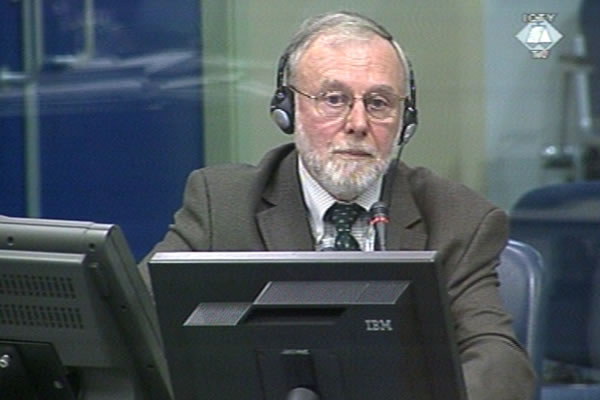
Dr. William Haglund testifies before the International Criminal Tribunal for the former Yugoslavia in The Hague, January 2012. Photo: ICTY / Physicians for Human Rights
It was the unravelling of Yugoslavia that redirected the course of Haglund's career. In the early 1990s he began consulting as a forensic anthropologist on human rights investigations in Bosnia and Croatia, work that, by his own account, became "a catalyst" for everything that followed. In 1995 he left the King County Medical Examiner's Office altogether to become a senior forensic advisor to the United Nations' international criminal tribunals, documenting mass killings in the former Yugoslavia and, that same year, in Rwanda. He later described the whiplash of that transition in blunt, arithmetic terms: "In 1996, I went from the Green River investigation that spent more than 20 years and $30 million to investigate the deaths of about 50 women, to Rwanda, with 800,000 to 1 million killed in three months by low-tech machetes and clubs, a $1 million budget and two months to identify 500 people."
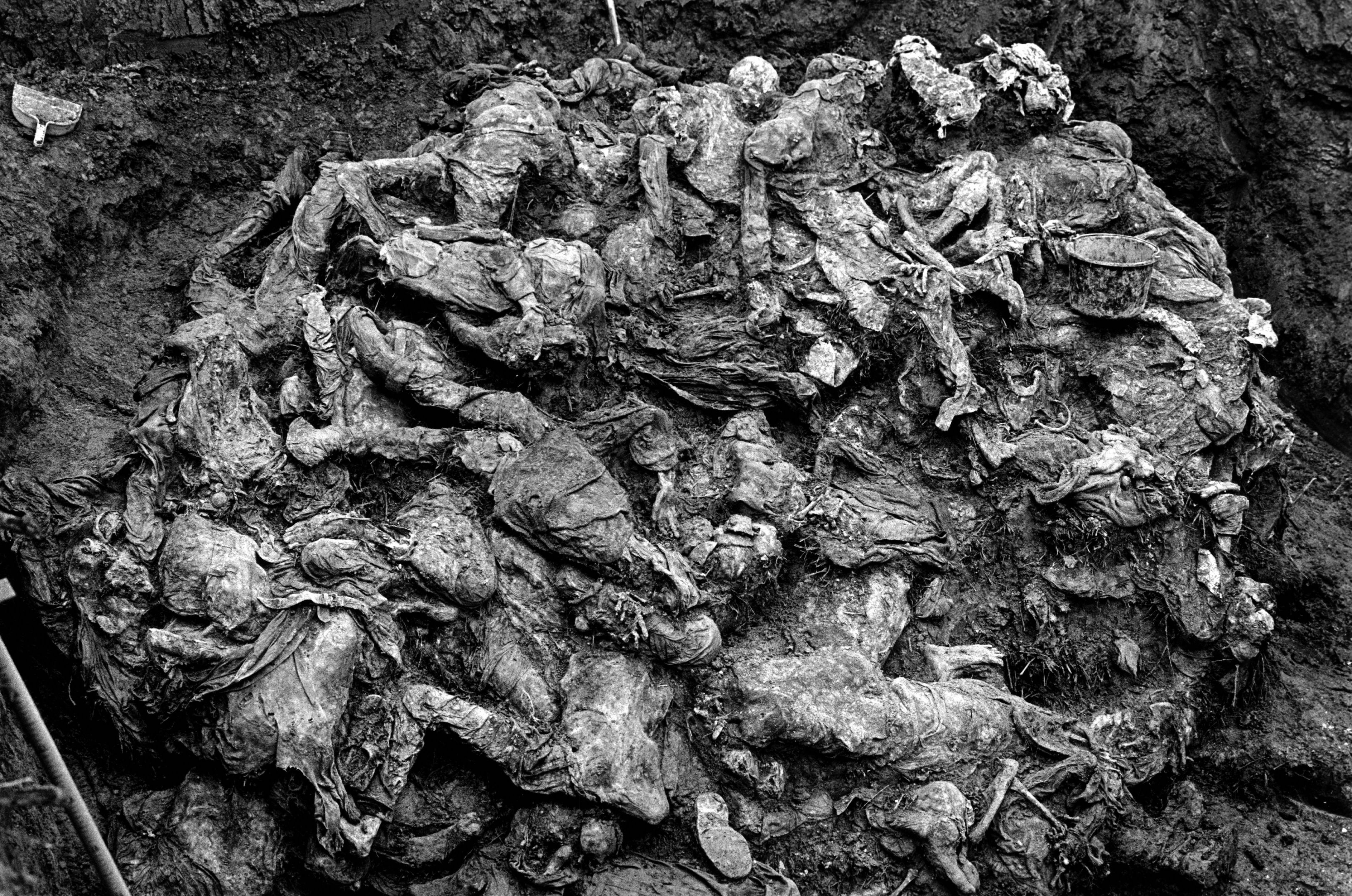 Photo by Gilles Peress, from the book 'Graves'
1996 was, in Haglund's own words, "my most difficult year" — eight straight months spent working inside mass graves on two continents. That July, as the lead forensic anthropologist for Physicians for Human Rights, he led a six-member international team of archaeologists, anthropologists and pathologists into the hills around Srebrenica, where more than 8,000 Muslim men and boys had been murdered the previous year after Bosnian Serb forces overran the UN-declared "safe area." Over the following months his team exhumed the graves at Cerska, Nova Kasaba, Lazete and the Branjevo Farm site near Pilica — recovering, among others, the remains of at least 150 men and boys at Cerska and at least 132 at Branjevo Farm, many found bound hand and foot, many blindfolded. The United Nations Protection Force had a mandate to guard the living, not the dead, so Haglund rolled out a sleeping bag at the edge of one of the graves and slept there, night after night, because it was the only way he could safeguard the integrity of the site and ensure no one tampered with the evidence before his team could document it.
"It was like giving birth to the dead," Haglund said of a now-famous 1996 black-and-white photograph by Gilles Peress that shows him knee-deep in mud inside a Srebrenica grave, cradling the head of a decomposing body he was trying to free. The image, later compared by critics to Michelangelo's Pietà, appeared in The Graves: Srebrenica and Vukovar, the 1998 book on the exhumations by Eric Stover and Peress that first brought Haglund's work to wide public attention. He described the physical and psychological toll of the labour itself to a PBS Frontline/World reporter in characteristically unsentimental terms: "It's not fun down there. You're like a living tentacle that's lifting, reaching around all this death, trying to pull it out."
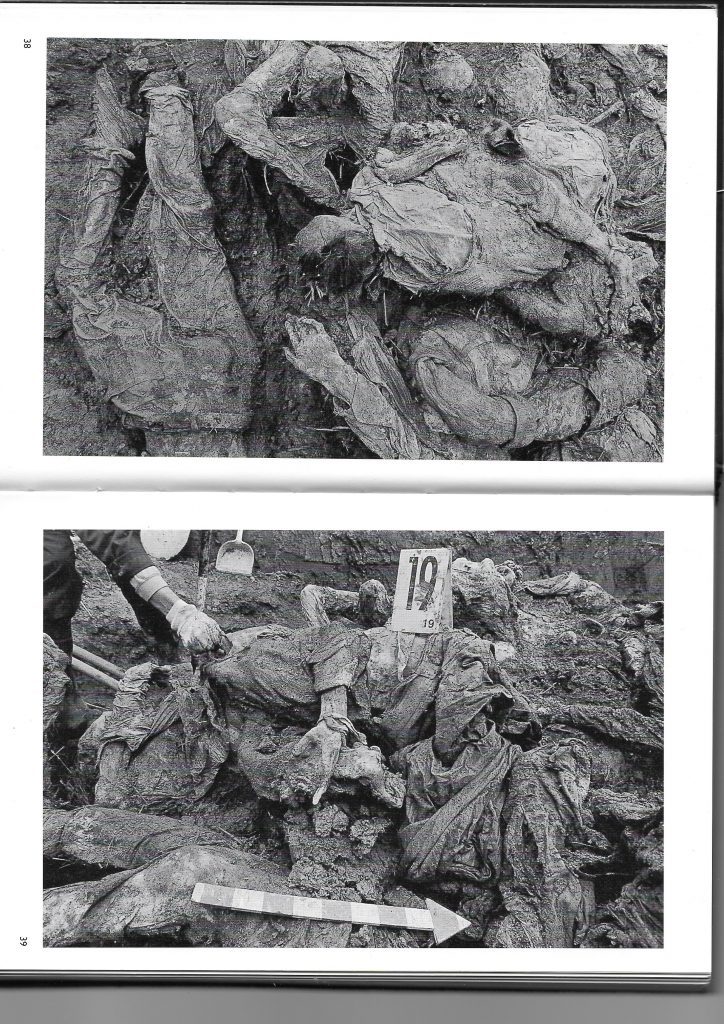
The forensic findings from Srebrenica — the ligatures, the blindfolds, the execution-style wound patterns, the evidence that these were not combat casualties but bound civilians shot at close range — became central to the case against the Bosnian Serb leadership. Haglund testified repeatedly before the ICTY about what his team had found, appearing as a prosecution witness in multiple Srebrenica-related trials over more than a decade, including the 2012 trial of Radovan Karadžić, who chose to represent himself and cross-examined Haglund directly in the courtroom. Karadžić suggested that the blindfolds recovered from the graves might instead have been bandanas worn by Bosnian government combatants that had simply slipped down over their eyes. Haglund's reply was dry and unmoved: "People don't fight with their blindfolds on." Pressed further on whether the material could have migrated after death, he explained that it had been "tied tight right below the eyes and didn't slip," and that his team had also recovered "a lot of rings of loose cloth" consistent with bindings rather than headwear. Asked at an earlier trial whether the deaths he documented could have been suicides, Haglund answered just as plainly: "I have investigated many suicides. I have never seen an individual with their hands bound behind their back shoot themself multiple times."
"I shouldn't have used that word," Haglund told the tribunal at one point, after a lawyer pressed him on his use of the term "executions" in a report. "These are deaths and I'm not there to prove executions. I talk for the dead people and not for the tribunal." A colleague from Physicians for Human Rights who watched him testify in January 2012 described him on the stand as "deliberate and even professorial," staring evenly across the courtroom at the man his evidence was helping to convict. The forensic record Haglund and his colleagues built at Srebrenica would go on to underpin the 2016 conviction of Karadžić and the 2017 conviction of Mladić, both found guilty of genocide, crimes against humanity and war crimes, and both sentenced to life in prison.
From 1998 to 2006 Haglund directed Physicians for Human Rights' International Forensic Program, taking his work to Afghanistan, Iraq, East Timor, Sierra Leone, Somaliland, Sri Lanka, Grenada, Abkhazia, Cyprus and Nigeria. In Cyprus he helped lead efforts to identify the dead of the 1974 conflict between Turkish and Greek Cypriots; in Nigeria, in 2004, he located and exhumed the remains of the executed writer and environmental activist Ken Saro-Wiwa, personally returning them to Saro-Wiwa's 101-year-old father. "I always tell families that I think how I would feel if my son or daughter were missing, and there were no one to sit at the table, no one to walk through the front door, or to lie beside you at night," he said of that work. "I would say, 'Help me. Help me to find them.'" He was equally direct about the limits of his own risk tolerance, he declined to work in Chechnya when told he would have to travel blindfolded to a grave site ("I said that's too dicey, send me a tooth"), and he turned down tribunal work in Iraq because he judged the war that preceded it internationally uncondoned. "I'm not a forensic martyr," he said. "I never felt losing one's life was worth a dead body."
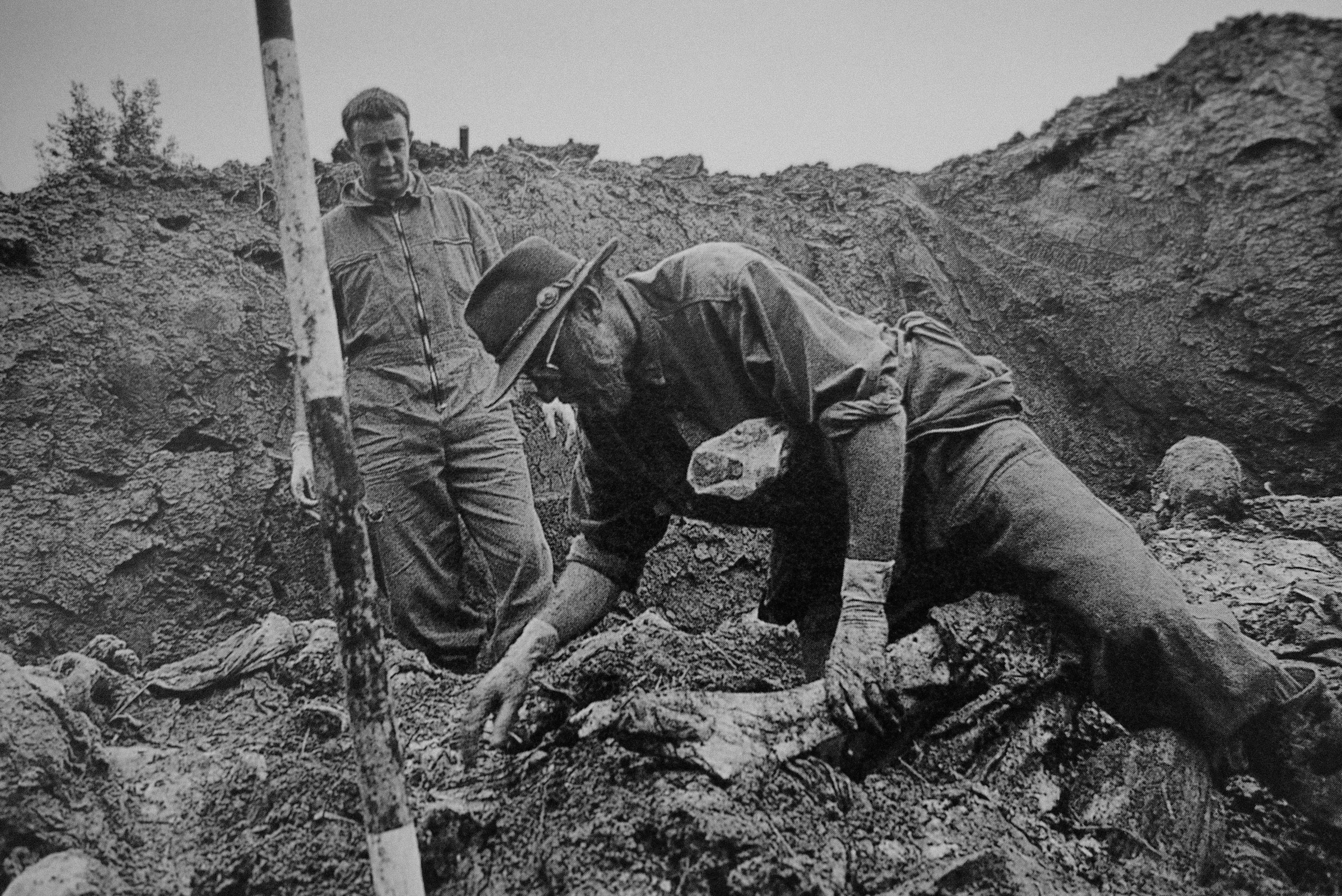 Photo by Gilles Peress, from the book 'Graves'
Haglund's scientific legacy extended well beyond the courtroom. He was a pioneer of forensic taphonomy, the study of how bodies decompose after death, co-editing two foundational textbooks on the subject with Marcella Sorg of the University of Maine. "He had one of the busiest and most productive minds in academia, a truly prodigious intellect," Sorg said. "If he wasn't making music, he was thinking about his research. He'd call me in the middle of the night sometimes, from whatever country he was in at the moment, to talk about a chapter we were working on." A Fellow of the American Academy of Forensic Sciences, Haglund received the Academy's T. Dale Stewart Award in 2013 in recognition of his lifetime contributions to taphonomy and human rights work. His career, and his bond with Bosnia in particular, was the subject of the 2006 Belgian documentary L'identificateur (released in English as The Seeker), which followed him into the field and into the tribunal courtroom.
Away from the graves, those who knew Haglund remembered a musician, a prankster, a voracious reader and an unrepentant insomniac who once raised snakes as pets. He played folk, bluegrass and harmonica and for years he and his wife Claudia hosted Tuesday-night music parties at their home. Reflecting near the end of his active career on why he had chosen this work, he traced it back to one of his first autopsies in King County, in 1980, examining the body of a small child who had been beaten to death. "I thought, that child was helpless and innocent, and we're their advocates," he said. "We speak for them. We are witnesses for them. And I like that voice."
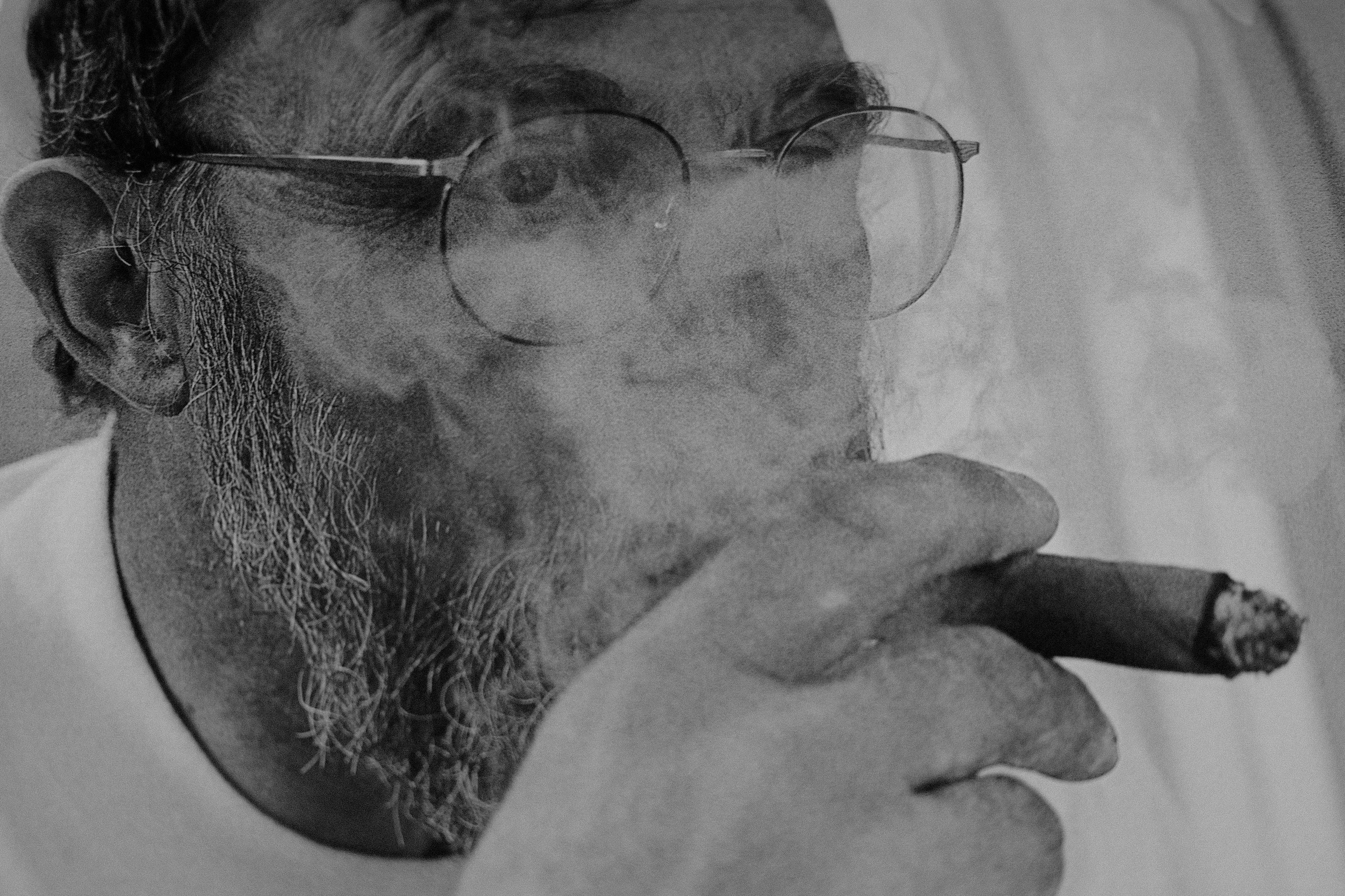 Photo by Gilles Peress, from the book 'Graves'
WILLIAM D. HAGLUND was born on 26 April 1943 in Duluth, Minnesota.
He died on 16 June 2021 in Shoreline, Washington, after a long battle with dementia, at the age of 78.
Survived by his daughter, Kim; son, Noah; daughter-in-law, Olga; two grandsons; two granddaughters; former wife, Ginny; sister, Heidi; and brothers Frank and Bennie. Preceded in death by his wife, Claudia; sister, Rita; and brother, Wende.
__
Cover photo Gilles Peress