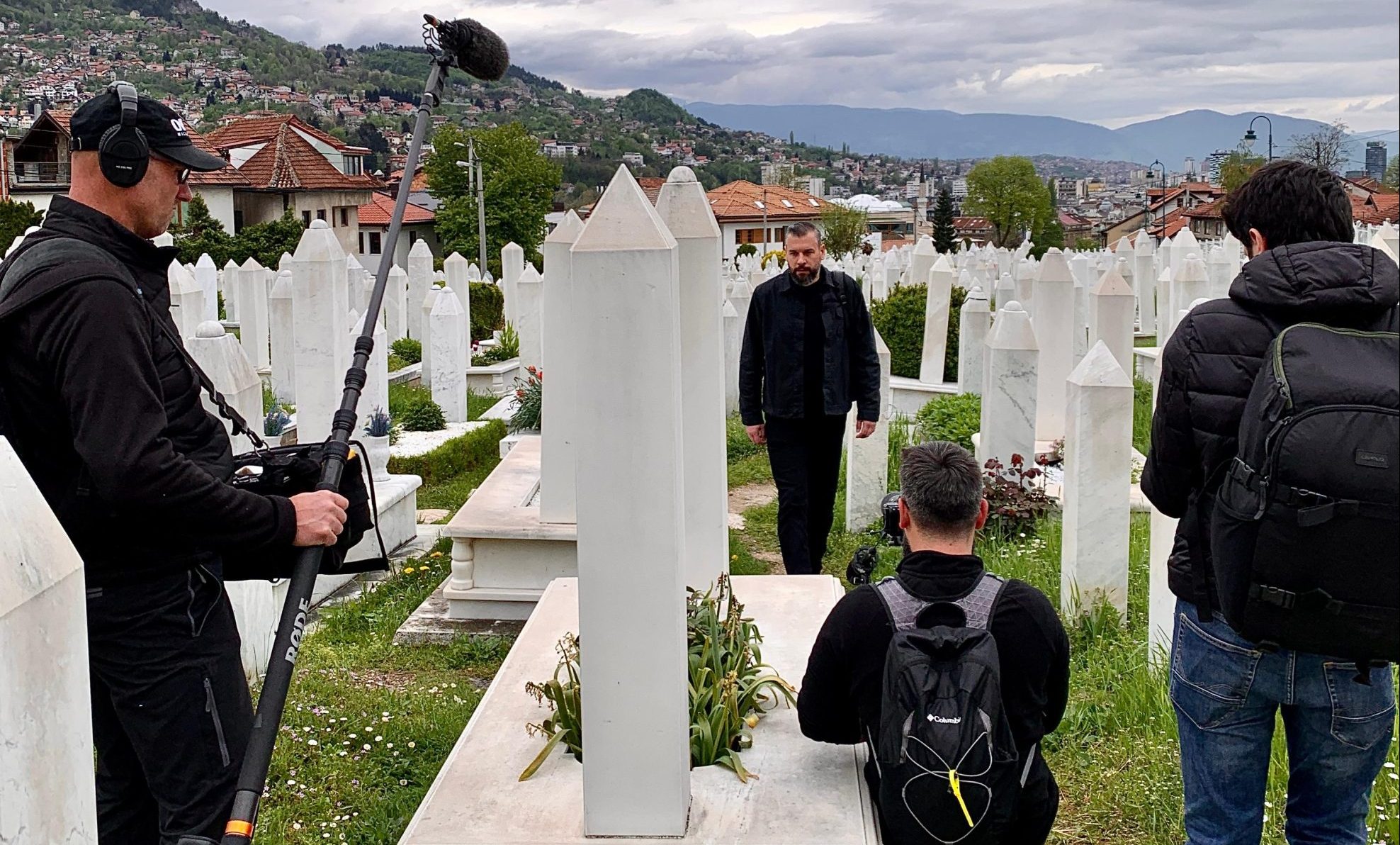
Since its first edition three decades ago, in a city under siege, the Sarajevo Film Festival has always screened documentaries that resonate with Sarajevans.
The festival has grown into a major event, lighting up the Bosnian capital for one week every year with parties, red carpets and celebrity photo-calls, yet it has always remained a venue for telling hard-hitting stories about Bosnia and elsewhere.
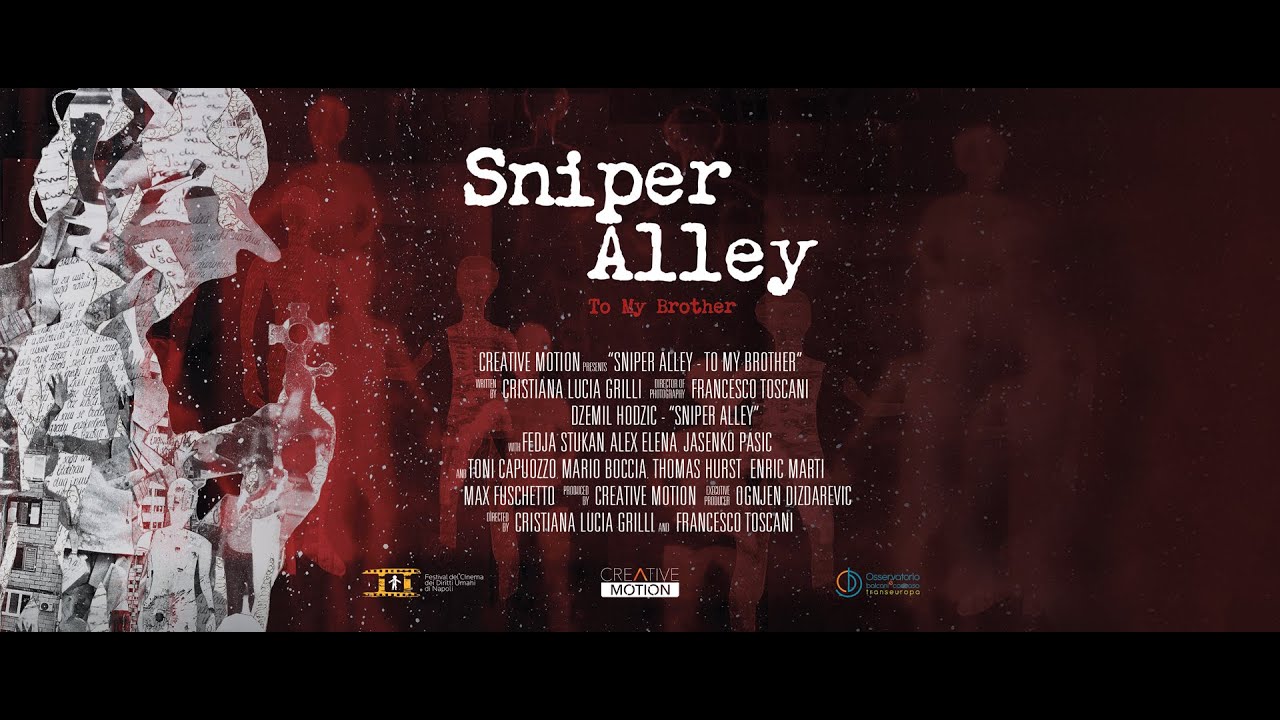
This year, it’s the turn of ‘Sniper Alley – To My Brother’, the true story of 41-year-old Sarajevan Dzemil Hodzic’s quest to track down photographs of his brother Amel, who was shot dead by a sniper in 1995 as the pair played outside, lulled into the streets of their hometown by an official truce.
Since 2019, when he launched his Sniper Alley website project, 112 photographers who covered the 1992-95 war have opened their archives to Hodzic. It took two years for him to find a photo of himself and Amel from 1993, taken by the American photojournalist Thomas James Hurst, then covering his first conflict.
Sniper Alley has since surpassed all Hodzic’s expectations, becoming itself an archive of a city under siege, treasured by Sarajevans for preserving the collective memory of the war.
“The film tells the story about the project, but also about me,” Hodzic told BIRN. “It tells the journey I went on to find at least one photo of my brother Amel who was killed.”
Directed by Italian filmmakers Cristiana Lucia Grilli and Francesco Toscani, ‘Sniper Alley – To My Brother’ pieces together the killing of Amel, who died in his mother’s arms on May 3, 1995. He was 16 years old.
Some 10,000 people were killed during the siege of Sarajevo, when Bosnian Serb forces pounded the city indiscriminately from the surrounding hills for almost four years, while snipers picked off civilians at random.
“Through the film, we go to the place where my brother was killed, his grave, the location where the sniper was hiding, but we also tell the stories of some other photos of other kids,” Hodzic said.
One of the ‘kids’ was Mirela Geko, who lost her sister during the war.
Hodzic had posted a photo of Geko on the Sniper Alley site, which Geko only liked in the beginning. Two days later she shared it on Twitter, thanking the project.
“When I met her a few years later, she said that she didn’t recognise herself… It was her older brother who remembered her as a baby and was able to make the connection,” Hodzic said.
Hodzic moved to Qatar 17 years ago, describing his departure as “temporary”. Returning every summer to Sarajevo, he visits the same places seen in the film.
“I sometimes take binoculars with me to Spicasta Stijena,” he said, referring to a rock formation overlooking Sarajevo. “I don’t enjoy the view, but I still go there.”
Hodzic said he’s only “half-way” through the Sniper Alley online project and hopes that the documentary will encourage more people to share their photos and stories from the siege.
“Whenever I speak about it, I say what has been done ‘until now’,” he said, stressing the importance of truth in the stories of survivors given the scourge of historical revisionism and war crimes denial in Bosnia three decades after armed conflict ended.
“We cannot allow history to be altered, textbooks to be rewritten, or this distorted narrative to be imposed upon us,” Hodzic told BIRN.
“Repeating the story is the only way to resist fascists and war criminals.”
‘Sniper Alley – To My Brother’ will be shown on August 18 as part of the documentary programme of the Sarajevo Film Festival. Online screening is also available via festival’s official app. More information about Sniper Alley is available here:
__
Published by BIRN in English on August 15, 2024.